Onshore/Offshore Facilities
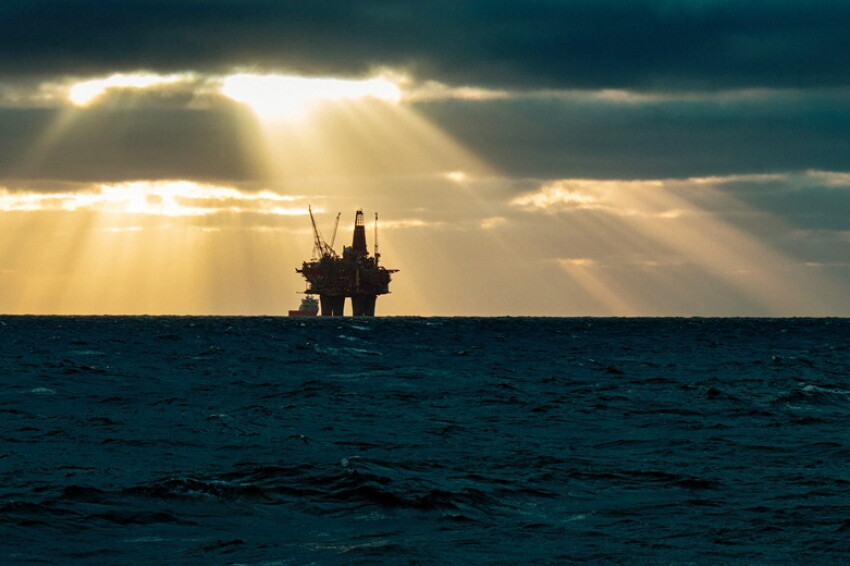
This paper identifies opportunities and risks associated with repurposing an offshore oil and gas platform for green hydrogen production. Various technical scenarios were investigated for the case study platform, and their profitability was determined using economic calculations. In addition, all the submodels were compared with standard decommissioning costs for reco…

This paper presents a flexible, highly cost- and energy-efficient method of gas separation and CO₂ capture from many different gas mixtures with a large range of CO₂ concentrations.

This work introduces a novel predictive methodology combining historical metocean data with real-time riser analysis for shallow water dynamically positioned rig operations.
-
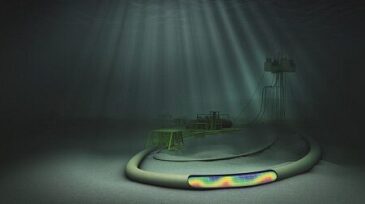
 Future offshore oil and gas fields are likely to be satellite developments that emit less greenhouse gas because they do not require new production platforms. A new computational tool is now enabling the design of longer pipelines that will allow many more fields to be developed as satellites.
 -
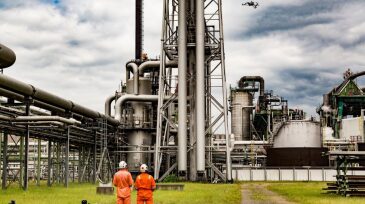
Cyberhawk will provide drone inspection, surveying, data visualization services, and inspection reports.
-
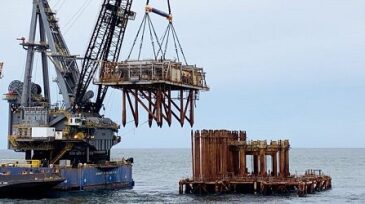
The Bureau of Safety and Environmental Enforcement approved the conversion of the Lena compliant tower platform into an artificial reef under the bureau’s Rigs to Reefs program.
-
The newly launched video series featuring speaker Bob Chin, the creator and editor of the OGF Savvy Separator Series of articles, provides a basic level of understanding of separator design and troubleshooting.
-
The LNG project includes development of offshore gas fields in Mozambique’s Area 1 and a liquefaction plant with a capacity in excess of 12 mtpa. The gas turbines are slated for delivery in 2H 2021 and 1H 2022, and the compressors are expected in 2021.
-
Akers BP said it will use lessons learned from the pilot and scale the remote-assist concept across its assets.
-
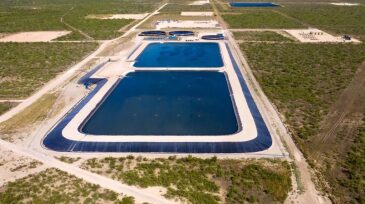
Breakwater’s produced-water-recycling facility has the flexibility to recycle, store, or dispose of water. It has already recycled nearly 5 million bbl of produced water in the third quarter of 2020.
-
The FPSO will be capable of processing 90,000 B/D of crude, 75 million ft3/D, 120,000 B/D of water injection, and a storage capacity of 900,000 bbl of crude oil. First oil is planned for 2021.
-
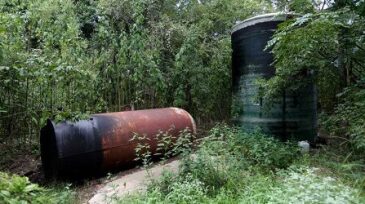
Plugging and cleaning up the open oil and gas wells in Texas could cost companies and taxpayers as much as $117 billion, according to a new report.
-
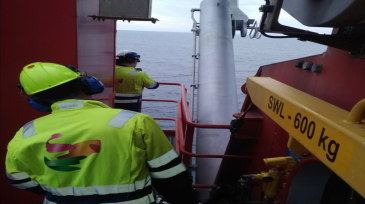
The Bubbleheads, a team of four deep-sea saturation divers, share the view of a bellman.