Onshore/Offshore Facilities

Despite significant progress in capturing associated gas for domestic use, Iraq remains the world’s third-largest gas-flaring country as it aims for higher oil and gas production targets.

The 2026 Upstream Scale Guidelines establish a common workflow for field measurements, scale modeling, and risk assessment to support more consistent operational decisions.

Shell has reached FID on LNG Canada Phase 2, a major expansion that will double the Kitimat facility’s LNG export capacity to 28 mtpa and strengthen long-term supply to growing Asian markets.
-
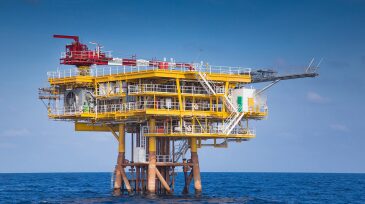
 As production from mature basins onshore and in shallow water declines, the development of deepwater reserves has become vital. Consequently, production and Capex are expected to rise.
 -
The application of lessons learned in projects is generally a trusted approach to tackling design challenges. However, the design of onshore production systems for unconventional resources does not allow for straightforward crossover from onshore or offshore conventional to unconventional systems.
-
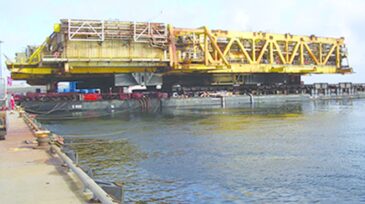
Decommissioning costs are often made higher by decisions made during the initial engineering and construction stages of an offshore oil or gas field. Designing with a critical eye can go a long way toward reducing the decommissioning costs, which occur decades later.
-
Engineers who design separators often use rules of thumb. While useful, the theoretical guidelines are typically written for downstream separators and are difficult to apply to the changing dynamics of upstream field conditions.
-
This paper provides an overview of an engineering-design methodology that can be followed for tubular-equipment sizing and selection for use in complex wells.
-
This paper will demonstrate the benefit of liner-drilling technology used to drill and cement an operator’s 9⅝- and 7-in. liners in place.
-
Results from a well recently drilled into an underpressured reservoir in southern Mexico.
-
The NORSOK standard focuses on the establishment of well barriers and well-barrier elements, and how these are accepted and monitored to prevent loss of well integrity that ultimately could lead to a loss in wellbore-fluid containment.
-
This paper reviews the mechanisms of initiation and the prevention of top-of-the-line corrosion (TLC). Recent research and developments are highlighted and validated to arrive at best practices for control of this significant corrosion manifestation.
-
The 2014 Annual Technical Conference and Exhibition (ATCE) will take place in Amsterdam. With its aging wells and processing facilities that present specific challenges, Europe is an interesting place for oil and gas production and applied separations technology.