Onshore/Offshore Facilities

Despite significant progress in capturing associated gas for domestic use, Iraq remains the world’s third-largest gas-flaring country as it aims for higher oil and gas production targets.

The 2026 Upstream Scale Guidelines establish a common workflow for field measurements, scale modeling, and risk assessment to support more consistent operational decisions.

Shell has reached FID on LNG Canada Phase 2, a major expansion that will double the Kitimat facility’s LNG export capacity to 28 mtpa and strengthen long-term supply to growing Asian markets.
-
 Fluid flows in separation vessels are key to effective performance. The flow distributions are affected by the vessel, the configuration of its internals, and the layout of the upstream piping connecting to the vessel’s inlet nozzle.
 -
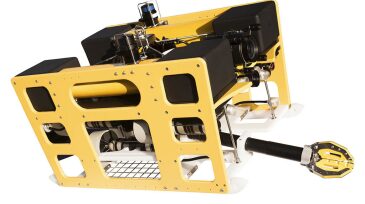
The market for subsea vessel operations in field development; inspection, repair, and maintenance (IRM); and subsea well intervention is expected to grow 63% during 2012 to 2016.
-
Physical properties of crude oil, such as gravity, viscosity, and water density, drive the selection of technologies to be used for effective dehydration. For heavy crude oils, process temperature is often increased to lower viscosity, but there are limits, after which alternatives are needed.
-
This paper describes a gas-hydrate model for oil-dominated systems, which can be used for the design and optimization of facilities focusing on the prevention, management, and remediation of hydrates in flowlines.
-
Through a range of experiments the authors demonstrate that small amount of H2S can be beneficial in reducing corrosion in 3% Cr steel.
-
Complexity is now a day-to-day parameter in the world of the subsea engineer. We are not developing these systems for fun; huge value is associated with maximizing recovery from these deep, remote oil and gas reservoirs.
-
Asset integrity management encompasses the design, operation, and maintenance of an asset to preserve its integrity at an acceptable level of risk throughout its operating life.
-
From 2006 to 2010, much of the liquefied natural gas (LNG) export construction activity occurred in the Middle East, in particular Qatar.
-
The present work describes the development of a 1D steady-state isothermal reservoir/surface gas-pipeline-network model. The developed model is an extension of the general pipeline-network model in which the deliverability from the wells is calculated.
-
One of the more challenging flow assurance problems in deepwater subsea gas pipelines and equipment is the formation of natural gas hydrates. Gas hydrates form under conditions of low temperatures and high pressures, such as those found in deep water.