Onshore/Offshore Facilities

Argentina’s President Javier Milei met with TotalEnergies CEO Patrick Pouyanné and Eni CEO Claudio Descalzi in Paris to discuss Argentina’s energy sector, including projects linked to the Vaca Muerta shale formation and the development of the Argentina LNG export project.

The Absheron gas field expansion will supply additional natural gas to Azerbaijan’s domestic market and support its export commitments to Turkey, allowing Baku to stay focused on meeting its gas export obligations to Europe.
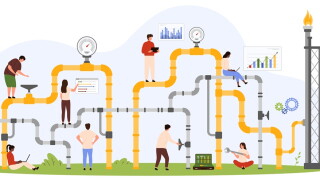
A credible custody-transfer record depends on far more than the accuracy of a single meter. It is the product of an integrated measurement chain. While meter performance supports measurement-system integrity, commercial confidence also depends on traceability, governance, and authorization.
-
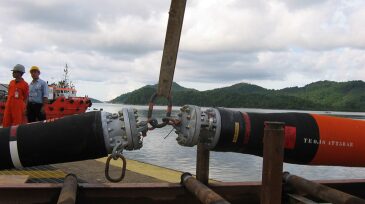
 Global trade for LNG is projected to rise by 50% by 2020. There is a clear acceleration in demand for small- and medium-scale LNG, necessitating splitting of LNG into smaller load parcels. Transfer methods applicable to deeper water, smaller LNG carriers, and harsh environments are critical.
-
This study examines how subsea processing (SSP) can develop into an important enabling technology for future ultradeepwater-field developments and long-distance tiebacks.
-
The costs of subsea boosting systems have been reduced by adopting three primary strategies: simplifying the system design to reduce weight and cost, simplifying the installation and intervention, and reducing complexity and risk.
-
Emphasis on identifying more-efficient subsea boosting solutions has led to a number of initiatives in the industry.
-
Petronas cancels plans for the development of the Pacific Northwest LNG project in British Columbia intended to take away natural gas from the Montney formation for shipping to Asian countries. Low LNG prices strike a blow to the feasibility of the project.
-
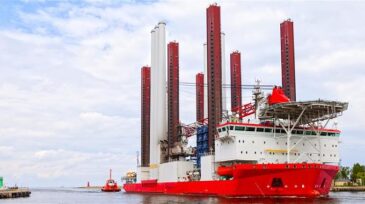
The top US wind power official told the offshore upstream sector that it can help build “smaller, leaner, and cheaper" wind turbine farms.
-
Part 2 of this two-part series presents a new methodology for sizing and rating three-phase separators based on quantifying the actual mechanisms and physics that govern separation performance. An example illustrates the calculations needed to achieve the specified outlet fluid qualities.
-
Operators need to take steps to protect their facilities from drone security breaches by outsiders. The costs an attacker incurs in developing tools to break into and control infrastructure is low compared to the costs an operator incurs in defending against those tools.
-
Cost and delivery of long-distance natural gas pipelines to a distant liquefaction facility at a warm-water port has become excessive, and environmental restraints have been increasing. An alternative is an offshore ice-resistant LNG port accommodating a new class of LNG transport vessels.
-
To reduce the risks to arctic pipelines from natural or geologic hazards, a more sophisticated approach to routing compared to traditional methods based on only the shortest length of pipe or connectivity to existing infrastructure is needed.