Onshore/Offshore Facilities

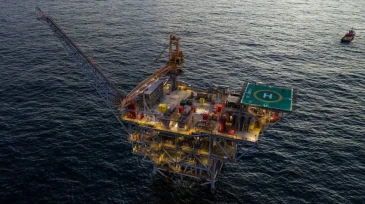
The Absheron gas field expansion will supply additional natural gas to Azerbaijan’s domestic market and support its export commitments to Turkey, allowing Baku to stay focused on meeting its gas export obligations to Europe.
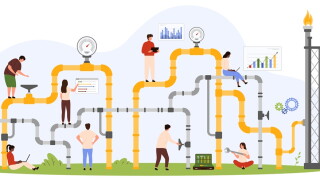
A credible custody-transfer record depends on far more than the accuracy of a single meter. It is the product of an integrated measurement chain. While meter performance supports measurement-system integrity, commercial confidence also depends on traceability, governance, and authorization.

Despite significant progress in capturing associated gas for domestic use, Iraq remains the world’s third-largest gas-flaring country as it aims for higher oil and gas production targets.
-
 The shallow-water subsea tieback to the Jupiter platform is expected to produce about 250 MMcf/D of gas at peak.
 -
Ginger is among the 10 upstream projects that BP plans to bring on-stream by 2027 after resetting its strategy to raise oil and gas investments to $10 billion per year.
-
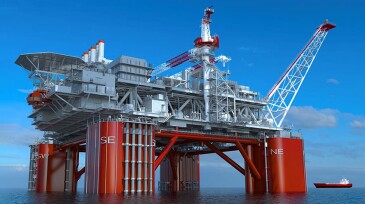
SLB will use artificial intelligence-based software to help ensure the delivery of 18 ultradeepwater wells.
-
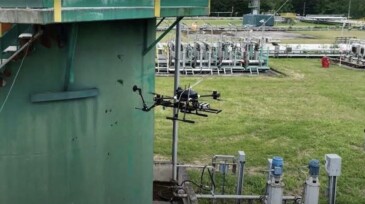
A robotic arm, camera system, and virtual reality helped EniProgetti and University of Naples researchers overcome the major challenges of direct-contact nondestructive testing using a drone.
-
Launch of development drilling marks a new milestone as Romania aspires to become EU’s largest gas producer.
-
US LNG exports to Asia rose from 3.1 Bcf/D in 2023 to 4 Bcf/D last year.
-
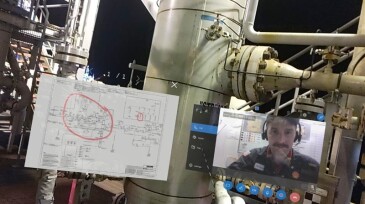
Shell’s combination of digital worker technologies enables collaborative troubleshooting and inspections while reducing travel and boosting efficiency.
-
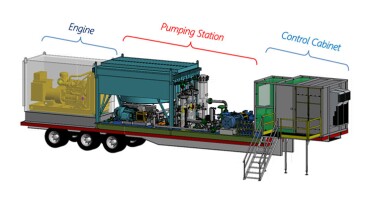
This article describes a technology combining a compression unit with a flexible line to offer a flaring alternative for transferring hydrocarbons.
-
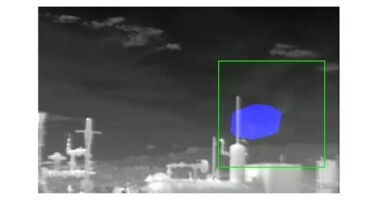
This paper describes a deep-learning image-processing model that uses videos captured by a specialized optical gas-imaging camera to detect natural gas leaks.
-
This paper describes an intelligent completion system in the context of multiple wells that, by electrifying the process, replaces the conventional electrohydraulic systems that have been in use for decades.