Onshore/Offshore Facilities

The events will be co-located 3–5 May 2027 at Reliant Park in Houston, Texas.

The supermajor said the fields are not expected to contribute meaningfully to its production profile by 2030.

This paper introduces in-pipe inspection technologies enabling high-resolution digital measurements of tubular internal diameter and wall thickness for critical downhole applications.
-
 Growing supply of Permian crude oil means the basin will need extra takeaway capacity of up to 500,000 B/D by the end of the 2020s, according to new research from Wood Mackenzie.
 -
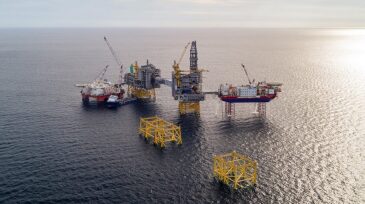
The Norwegian operator will increase its ownership of the giant Johan Sverdrup field before the field commences oil production this November.
-
Early production from Area 1 is the first output from an international operator in Mexico since energy reforms were implemented earlier this decade.
-
With almost 10 Bcf/D of liquefaction capacity scheduled to go into service by 2025, a new report from Moody’s says that US LNG exports should help solidify a floor under natural gas prices as LNG markets see a shortfall in supply.
-
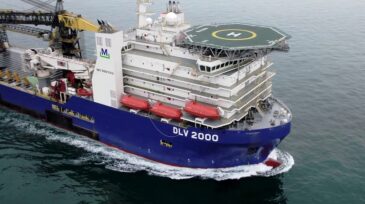
Completion comes despite two cyclones disrupting the project area during installation, McDermott said.
-
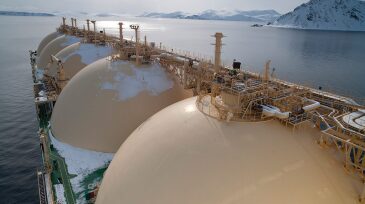
In its first 50 years, LNG has become the world’s fastest-growing gas supply source and is now part of an upheaval in the global energy market. Today, the sector stands at a crossroads, and the industry must adopt new thinking to address current and future needs of buyers, sellers, and consumers.
-
Exponential thinking is called the “exponential surprise factor.” These underpinnings are observed on the tubular mechanics side also through data analytics, machine learning, artificial intelligence, and cognitive processes.
-
The deal consists of stakes in nine shallow-water producing fields covering 108,000 gross acres in 10–50 m of water.
-
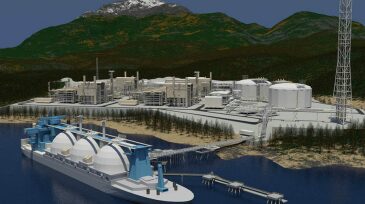
The $30.5-billion project is expected to produce 18 mtpa of LNG once it starts up; commissioning is expected sometime in the mid-2020s. Canada’s investment includes $160 million to fund energy-efficient turbines, which the government says will minimize greenhouse gas emissions.
-
The well count and completion intensity of US tight oil and gas operations have grown in recent years, and rising pressure from environmental regulations means that produced water management has become a key focus for operators.