Onshore/Offshore Facilities

The events will be co-located 3–5 May 2027 at Reliant Park in Houston, Texas.

The supermajor said the fields are not expected to contribute meaningfully to its production profile by 2030.

This paper reviews a proof-of-concept project in which surplus casing pipes were used in the fabrication of purposefully designed artificial reef structures for the enhancement of biodiversity and commercial fisheries.
-
 The decision may alleviate some of the pressures oil and gas producers faced in the wake of their imposition last year. Canada and Mexico made up a combined 20% of US imports of oil country tubular goods in 2017.
 -
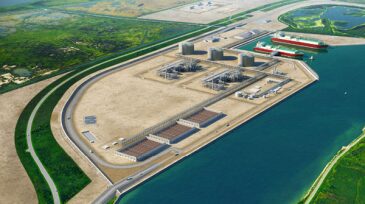
The deal with project developer Sempra includes Saudi Aramco netting 5 mtpa of LNG offtake and a 25% equity stake in Phase 1 of the export terminal, which may reach FID later this year.
-
Unmanned minimum facility platforms are a reliable alternative to traditional wellhead platforms or subsea installations, and the technologies enabling simpler designs have evolved.
-
Analytics, sensors, and robots are changing the way one of the world’s largest oil and gas companies does business. Underpinning all the new technology though is a shift in how BP thinks, and what it means to be a supermajor in the 21st century.
-
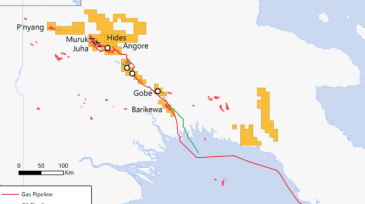
Santos signed a binding letter of intent to acquire a 14.3% interest in Petroleum Retention License 3, which contains the P’nyang natural gas field in Papua New Guinea.
-
The escalation of the trade war between the US and China could jeopardize several LNG megaprojects that are awaiting final approval.
-
A final investment decision is expected later this year on the project, which will involve the construction of two trains with a combined annual capacity of more than 15 mtpa of LNG.
-
The Russian independent will likely sell an ownership stake to an additional partner in the coming weeks, joining Total, CNOOC, and CNPC. FID is expected to take place later this year.
-
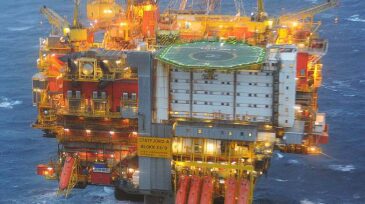
After producing for 43 years, the Statfjord A platform will cease production in 2022.
-
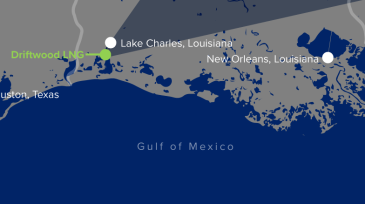
Driftwood is authorized to export up to 3.88 Bcf/D, and Port Arthur gets go-ahead for 1.91 Bcf/D of natural gas as LNG.