Onshore/Offshore Facilities

The supermajor said the fields are not expected to contribute meaningfully to its production profile by 2030.

A circular economy emphasizes reducing, reusing, recycling, and removing parts of existing systems to optimize them with respect to resource utilization. The following papers demonstrate how these pillars of a circular economy are enabling operators all over the world.
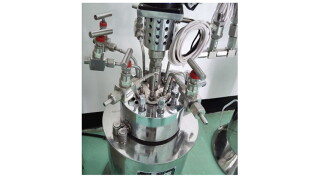
This study aims to systematically assess casing integrity and corrosion risks associated with CO2 injection in oil-recovery operations.
-
 Over 1,000 hours of remotely monitored continuous production was achieved on an unmanned platform—a first for standalone offshore solids management in the North Sea.
 -
Federal infrastructure law gives states financial incentive to remediate orphan wells.
-
The paper presents predicted vs. measured wear for six wells in the Culzean field, a high-pressure/high-temperature gas condensate field in the central North Sea.
-
The authors of this paper discuss a biosurfactant treatment that offers an economical method for remediation of formation damage caused by high-molecular-weight paraffin wax deposition in porous media.
-
The authors of this paper describe the development of a continuous monitoring solution throughout its deployment.
-
Three-year plus options deal could generate around $50 million in revenues for subsea contractor.
-
Uganda’s Lake Albert appears on track to first oil by 2025. The oil is expected to be exported via the 1443-km East Africa Crude Oil Pipeline.
-
Record prices and the need for energy security are driving US LNG market momentum.
-
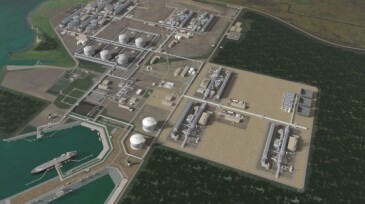
The company has tapped Bechtel to complete the front-end engineering and design study of the expansion, which would add 20 mtpa of LNG production capacity.
-
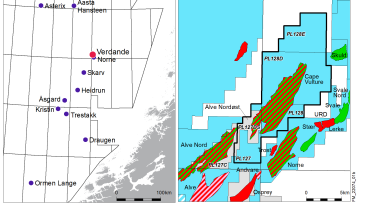
Equinor advances Irpa and Verdande field development projects closer to first oil with a raft of contract awards.