Onshore/Offshore Facilities

The supermajor said the fields are not expected to contribute meaningfully to its production profile by 2030.

This paper presents a study that confirms glass-reinforced-epoxy-lined tubing as a reliable, cost-effective solution for long-term water-injection service in moderate-salinity offshore environments.

This paper introduces in-pipe inspection technologies enabling high-resolution digital measurements of tubular internal diameter and wall thickness for critical downhole applications.
-
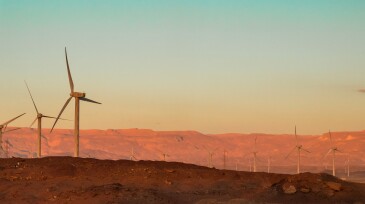
 Egypt bags its newest wind project with UAE to feed future electrical flows regionally and eventually to Europe.
 -
Britain’s North Sea Transition Authority is removing the requirement for offshore operators to submit Cessation of Production reports when preparing to abandon a field.
-
Emirates operator signs manufacturing agreements with 25 companies to manufacture oilfield components in-country.
-
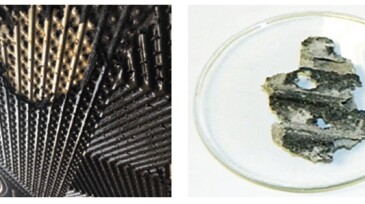
The authors of this paper discuss a robust omniphobic surface treatment material shown to significantly reduce the adhesion of flow-assurance solids.
-
This paper presents software used to understand how foams can alleviate slugging in pipelines.
-
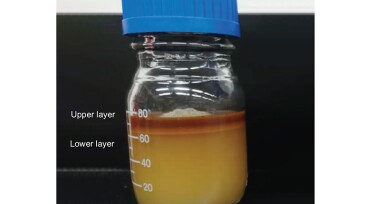
The authors of this paper describe a study of magnesian calcite particles forming hard, inhibitor-resistant calcium-carbonate-like deposits and potential mitigation measures.
-
US GOM players have come out of the pandemic slowdown with new perspectives on spending and cycle times and are targeting finds that can utilize existing hardware instead of those that require new iron.
-
Flow assurance effects from slugging and various types of solids deposition during engineering, design, maintenance, and operations still create challenging technical issues needing safe, economical solutions. The recurring long-term mitigation of flow assurance phenomena such as the deposition of wax, erosion, asphaltenes, corrosion, and salt, still demands attention…
-
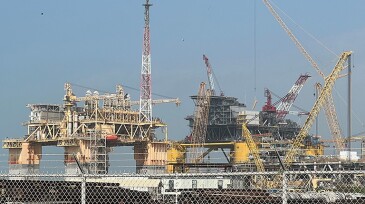
The two new facilities are expected to increase Saudi Arabia’s total annual offshore fabrication capacity to 100,000 mt.
-
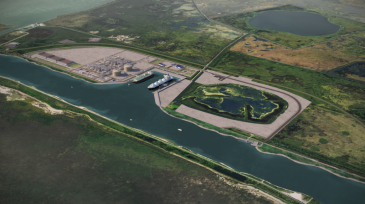
Initial facilities along the Sabine River in Texas will be capable of producing up to 13.5 mtpa of LNG.