Onshore/Offshore Facilities

The supermajor said the fields are not expected to contribute meaningfully to its production profile by 2030.

This paper reviews a proof-of-concept project in which surplus casing pipes were used in the fabrication of purposefully designed artificial reef structures for the enhancement of biodiversity and commercial fisheries.

This paper presents a study that confirms glass-reinforced-epoxy-lined tubing as a reliable, cost-effective solution for long-term water-injection service in moderate-salinity offshore environments.
-
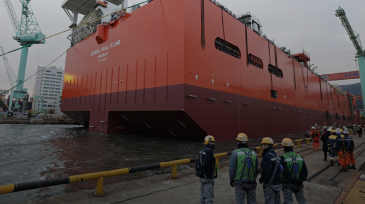
 Eni has proposed that its partners in the Rovuma LNG project construct a second floating liquefied natural gas processing facility to circumvent political risks that have disrupted ExxonMobil from building an onshore megaplant.
 -
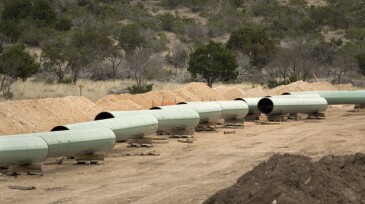
A fresh batch of expansions and a new pipeline are set to provide operators offtake options.
-
Many hurdles for marinization of green hydrogen production already have been overcome in the offshore oil and wind sectors. A fresh set of challenges, however, will rise around developing and deploying hydrogen production facilities offshore.
-
The Russian gas company announced that it will use locally source unmanned aerial vehicles to inspect its facilities and pipelines in the Yurkharovskoye field.
-
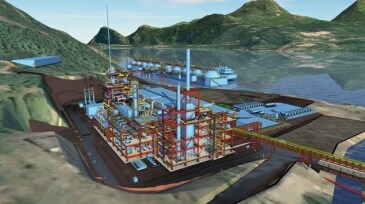
New liquefaction facility planned for Squamish, British Columbia, is expected online in 2027.
-
The paper provides an approach to mitigating the adverse effects of mercury found in production fields, including treatment-facility requirements and suitable technologies for production fields and onshore facilities.
-
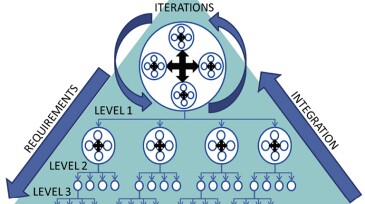
The paper describes a systems-engineering-guidance document currently being developed, and outlines the benefits associated with the use of formal systems-engineering processes when designing complex facilities.
-
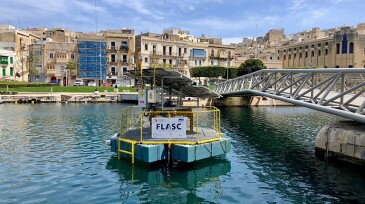
The partnership of Subsea 7 and Flasc has a plan to use out-of-service pipelines as pressure vessels in a hydro-pneumatic energy storage concept.
-
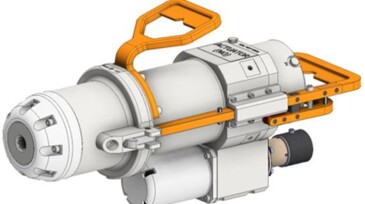
The paper describes the components of an all-electric system, how it fits within a subsea application, and how it compares with traditional electrohydraulic systems.
-
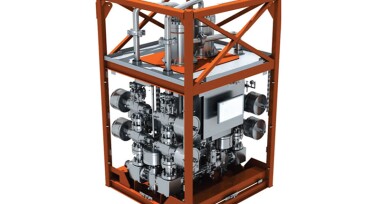
This paper highlights solids-management technologies that are currently available and still in use topside (some of which are potentially outdated).