Production

The 2026 Upstream Scale Guidelines establish a common workflow for field measurements, scale modeling, and risk assessment to support more consistent operational decisions.

The long-term outlook analysis says a potential shift toward new construction could push 2026 production 3% above 2025 levels.

Lower operating expenditures and a changing asset mix helped UKCS operators cut average production costs by 9% year over year, despite relatively flat production levels, according to the NSTA.
-
 Part 3 of this series looks at the importance of performance analysis and how to generate the economic benefit for solving conformance or sweep efficiency problems. The economic elements of this review are very basic, but they will help you to determine a more-accurate understanding of the true economic benefit.
 -
SponsoredQuickly identifing the right strategies for a well or pad can overcome operational challenges. These cost-effective and easy-to-use solutions help operators achieve improved production rates with less manpower.
-
Tokyo is seeking partnerships in the UAE to leverage its technologies to produce clean energy for export back to Japan.
-
The Irpa gas field, Verdande oil field, and Andvare production-well tiebacks will extend the lives of the mature Aasta Hansteen and Norne fields into the late 2030s.
-
There is a thin line between success and failure of clay stabilizers as they can either drive performance or cause unwanted formation damage.
-
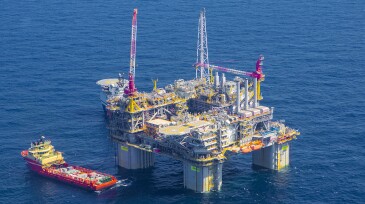
The supermajor redefined its Mad Dog II development in three key ways: a blank-sheet redesign to cut costs, altering the way it works as a result of the COVID-19 pandemic, and a digital twin offering unique access to the asset from anywhere in the world.
-
A new program offers an affordable way to figure out if salt precipitation could be behind underperforming gas wells and suggests a path to higher production.
-
A slate of new pipeline projects are expected to help relieve the oil-rich region's associated gas bottleneck.
-
Enverus claims hundreds of millions of barrels of gas condensates are nowhere to be found in public data due to a major reporting gap.
-
The first acid job dates to 1895. Challenges remain, however, when it comes to lithology, coverage, penetration, and management of reaction products. These themes remain a focus for stimulation engineers.