Production

The 2026 Upstream Scale Guidelines establish a common workflow for field measurements, scale modeling, and risk assessment to support more consistent operational decisions.

The long-term outlook analysis says a potential shift toward new construction could push 2026 production 3% above 2025 levels.

Lower operating expenditures and a changing asset mix helped UKCS operators cut average production costs by 9% year over year, despite relatively flat production levels, according to the NSTA.
-
 When water and metal meet, you get corrosion. You also get a good dose of creative engineering and innovation.
 -
This selection of papers will familiarize facilities engineers with a variety of topics so they are more prepared for what 2022 may bring.
-
Oil production in the US is resurging and poised to refute some skeptics who believed domestic output peaked just prior to the COVID-19 pandemic.
-
New projects coming on line throughout the year will vault the nation ahead of Australia and Qatar.
-
2020 was a year of turmoil for the upstream industry in the US, while 2021 proved to be a year of recovery.
-
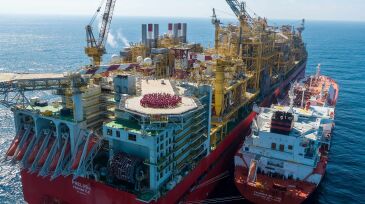
Being first isn’t easy, as the massive Prelude has demonstrated. Since being commissioned in 2018, the world’s largest vessel has suffered a series of setbacks and has now halted production for an indefinite period of time.
-
Next month, the 23-nation group of crude exporters will raise its allowable production output by another 400,000 B/D.
-
It appears to be possible to sense how fractures change during production using ultrasensitive fiber-optic strain measurements.
-
A rigless chemical frac-hit remediation process was designed to address the damage mechanisms of capillary phase trapping, reduced hydrocarbon relative permeability, paraffin deposition, and minor scale deposition.
-
This paper provides an alternative solution to identifying, classifying, and vertically distributing fractures and a lateral distribution method for reservoir modeling.