Production

Trafigura will purchase 100,000 metric tons of battery-grade lithium products under a decade-long take-or-pay contract valued at over $2 billion.

The 2026 Upstream Scale Guidelines establish a common workflow for field measurements, scale modeling, and risk assessment to support more consistent operational decisions.

The long-term outlook analysis says a potential shift toward new construction could push 2026 production 3% above 2025 levels.
-
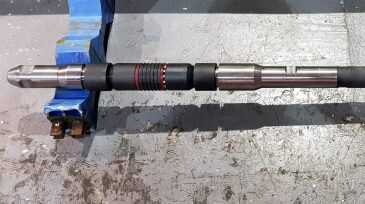
 Final lab testing has been completed and field trials of the ultrahigh expansion bridge plug will begin by the end of this year.
 -
The agreement will introduce rod couplings coated with nanolaminate technology with the goal of improving equipment reliability.
-
Oil and gas producers in the state are being asked to submit data and economic analysis on why they cannot sell natural gas before they are granted permission to flare it.
-
SponsoredWith an intense focus on improving returns and cash flow, oil and gas producers need step-change improvement in managing production versus plan. Embracing AI is critical to overcoming today's tools that largely fall short of achieving that ultimate goal.
-
With the acquisition of Schlumberger’s rod lift business, Lufkin gains several products, brands, and key proprietary software.
-
Wellbore tortuosity is a term that has steadily increased in relevance to the oil and gas industry over the past decade, but its importance is especially clear in the current environment.
-
To have the flexibility to treat both rich and lean gas wells [up to 100% gas volume fraction (GVF)], a new multiphase pump system has been developed by comparing the different boosting systems performance and analyzing well-by-well production scenarios.
-
To further reduce backpressure on low-pressure gas wells and increase reserves in a mature gas field, a gas-ejector project was evaluated and proposed.
-
Present industry solutions to the challenge of well spacing involve expensive geomechanical Earth modeling or fracture-geometry monitoring that is time-consuming, data-intensive, and geography-specific.
-
Primarily used in a few US states, waste-slurry-injection technology could help operators reduce cost, while also potentially reducing their carbon footprint. But the process may still present technical and environmental challenges.