Production

Trafigura will purchase 100,000 metric tons of battery-grade lithium products under a decade-long take-or-pay contract valued at over $2 billion.

The 2026 Upstream Scale Guidelines establish a common workflow for field measurements, scale modeling, and risk assessment to support more consistent operational decisions.

The long-term outlook analysis says a potential shift toward new construction could push 2026 production 3% above 2025 levels.
-
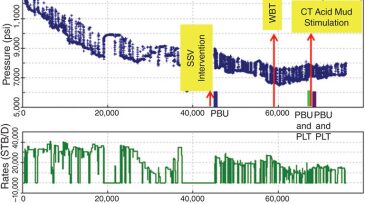
 A case study in the deepwater Gulf of Mexico in which pressure transient analysis, fractional flow, and production logging tools were integrated to identify correctly the cause of, and execute an effective remedy for, a well’s productivity deterioration.
 -
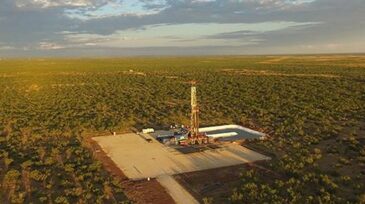
Despite reports to the contrary, Permian well productivity remains healthy, with average new production per well in the basin matching all-time highs, Rystad says. And the majors are now a main catalyst.
-
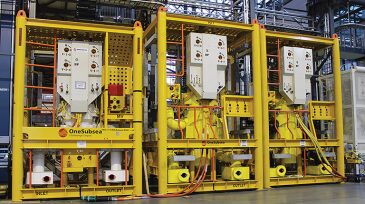
The first subsea multiphase boosting system was installed in 1994. Since then, it has grown into a technology with a global track record.
-
Using maglev technology, a new artificial lift system seeks to boost production output by sucking down reservoir pressure from inside the wellbore and from inside the reservoir.
-
Digital is replacing manual at Sanchez Oil & Gas. Since its implementation in 2017, the company’s Production Maintenance Tracker application has been transforming its operations management by bringing together all the assets, departments, and routes into one hub.
-
Permian Basin operators and service companies met to discuss completions diagnostics, flowback strategies, water management, and artificial lift strategies.
-
The new milestone was reached less than a year after the country surpassed 11 million B/D last summer, and is driven by activity in the Permian Basin and new fields in the Gulf of Mexico.
-
Early production from Area 1 is the first output from an international operator in Mexico since energy reforms were implemented earlier this decade.
-
SponsoredParaffins present in crude oil can gel or precipitate, which can cause pipeline and production system blockages. Dow’s ACCENT wax inhibitors are high-active, aqueous-based chemistry, that efficiently control paraffin deposition in pipelines.
-
The state-owned firm is looking within its home country, around Southeast Asia, and to the Americas—including shale—in an effort to maintain its forecast average yearly production of 1.7 million BOE/D over the next 5 years.