Production

At the inaugural SPE/ICoTA Asia Pacific Well Intervention and P&A Conference and Exhibition in Kuala Lumpur, industry leaders highlighted how high-fidelity well data, real-time diagnostics, and predictive technologies are reshaping intervention planning and execution to improve well performance, reduce risk, and optimize late-life asset management.

Sponsored
With operators under pressure to deliver more energy with fewer resources, predictable drilling performance is more important than ever. Discover how a unified digital workflow can turn drilling data into better decisions and consistent execution—providing the foundation for autonomous drilling and more predictable, profitable, and productive wells at scale.

Superior seeks to expand its international footprint through the acquisition, which is reportedly valued at $1.2 billion.
-
 ExxonMobil joins BP, Chevron, and TotalEnergies in greenlighting new investment projects in Iraq in 2025 as the government targets oil production of 6 million B/D by 2029.
 -
Liquefied natural gas (LNG) exporters in the US plan to more than double the country’s liquefaction capacity by adding an estimated 13.9 Bcf/D between 2025 and 2029.
-
EIA says rising inventories in China have offset downward pressure from growing global supply.
-
Two new wells add 15,000 BOE/D of peak capacity to the London-based supermajor's North Sea production profile.
-
Updates about global exploration and production activities and developments.
-
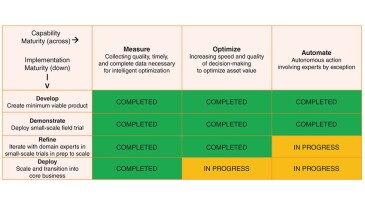
This paper presents a case study highlighting the demonstration, refinement, and implementation of a machine-learning algorithm to optimize multiple electrical-submersible-pump wells in the Permian Basin.
-
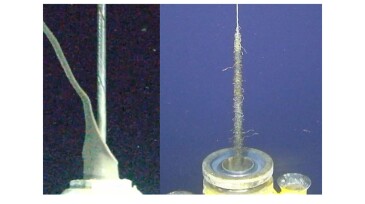
The experience captured in this paper illustrates the potential of deepwater riserless wireline subsea intervention capability and the fact that it can be expanded beyond hydraulic-only, simple mechanical, and plugging-and-abandonment scopes.
-
This paper presents a closed-loop iterative well-by-well gas lift optimization workflow deployed to more than 1,300 operator wells in the Permian Basin.
-
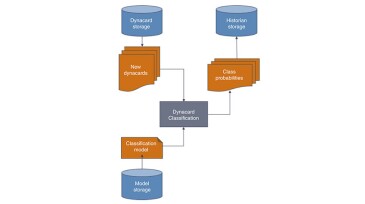
This paper explores the use of machine learning in predicting pump statuses, offering probabilistic assessments for each dynacard, automating real-time analysis, and facilitating early detection of pump damage.
-
The accelerating deployment of machine learning and automation is changing the artificial lift landscape. By embedding intelligence into the control loop, operators now can move from reactive decision-making to proactive, continuous optimization.