Production

Unlike traditional AI approaches that rely primarily on historical data, physics-based AI integrates physical laws, engineering expertise, and operational constraints directly into the learning process. Three recent SPE papers illustrate how this paradigm is transforming the industry through intelligent condition monitoring, virtual sensing, and autonomous production …

This research focuses on combining physics-based expert rules with machine learning to improve the detection of failure-related events in electrical submersible pumps.

A combination of physics principles and machine-learning techniques is used in this work to develop a virtual flowmeter for oil-production optimization in electrical-submersible-pump-lifted oil wells, resulting in reliable generalization.
-
 This study highlights the strategic implementation of coiled tubing to convey perforating guns in extended-reach wells, overcoming the lockup effect through the deployment of downhole tractors and real-time monitoring tools.
 -
This study emphasizes the vital need to evaluate well conditions and working-fluid compatibility with coiled tubing materials to prolong coiled tubing operational life.
-
Engineers desperately need an alternative to acid placement through pipe, coiled tubing, or bullheading. For example, propellants have been around for years; however, their performance has not quite met the hype. Nevertheless, several case histories have been authored to suggest their efficacy; historically, some treatments have even been wildly successful.
-
This paper describes the application of an underbalanced coiled tubing technology in tight sandstones, using an integrative approach that incorporates petrophysical, geophysical, and reservoir engineering data.
-
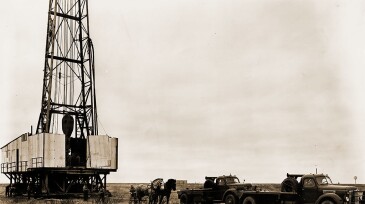
JPT’s first year of publication was one of groundbreaking events that would transform the global petroleum industry. A recap of developments in 1949 emphasizes the high hopes attached to the industry—and the ambitious goals of the new magazine.
-
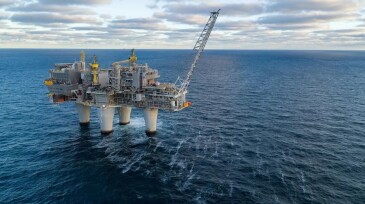
The first wells from the current North Sea development project are expected online in 2026.
-
This paper addresses the challenges of integrating huge amounts of data and developing model frameworks and systematic workflows to identify opportunities for production enhancement by choosing the best candidate wells.
-
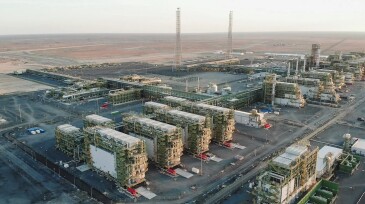
The $48.5-billion investment aims to keep the 30-year-old project in western Kazakhstan flowing for years to come.
-
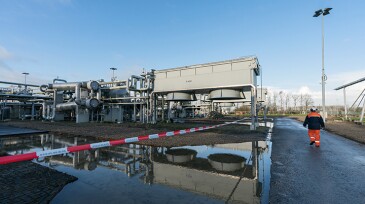
Dutch leaders have voted to halt all future production from the large gas field due to seismic activity linked to extraction operations.
-
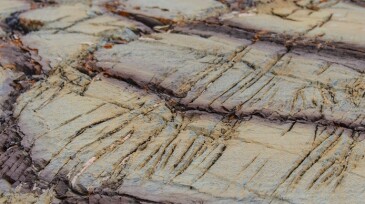
The index integrates three independent components extracted from static and dynamic parameters: reservoir permeability thickness, movable gas, and reservoir pressure from a historically matched dynamic model.