Production

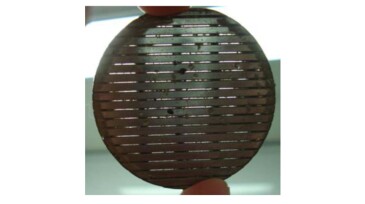
This paper aims to establish a set of best practices for generating particle-size-distribution data from core samples.

Unlike traditional AI approaches that rely primarily on historical data, physics-based AI integrates physical laws, engineering expertise, and operational constraints directly into the learning process. Three recent SPE papers illustrate how this paradigm is transforming the industry through intelligent condition monitoring, virtual sensing, and autonomous production …

This research focuses on combining physics-based expert rules with machine learning to improve the detection of failure-related events in electrical submersible pumps.
-
 The two LM9000-driven trains are part of the ZLNG nearshore floating LNG project.
 -
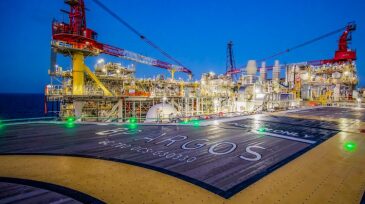
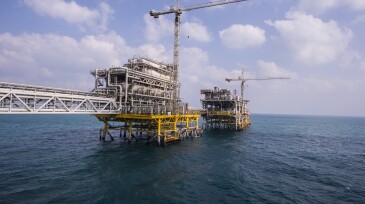
The semisubmersible host is the centerpiece of BP’s $9-billion Mad Dog Phase 2 project.
-
In Part 1 of a series of articles, the author highlights candidate selection and problem clarification. This section describes how the success rate of solving conformance problems is improved by reducing assumptions and improving your problem understanding prior to executing a solution.
-
This paper presents autonomous-inflow-control-device installations in multiple horizontal wells of the Singue oilfield development in Ecuador.
-
This year’s history matching and forecasting selections cover topics that include performance prediction of a polymerflood pilot in a heavy oil reservoir, multivariate characterization and modeling of a paleo zone, and multiwell pressure history matching in an unconventional reservoir.
-
Our shifting energy landscape requires a new way to measure the amount of energy that can be extracted from any given source against the energy required to produce and distribute it.
-
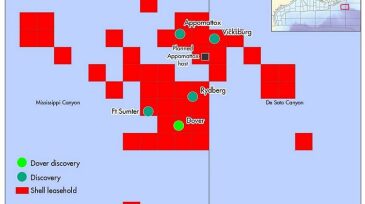
Production from the Dover field is expected to start in late 2024 or early 2025.
-
A new report from Rystad Energy expects more than $200 billion will flow into greenfield offshore projects over the next 2 years.
-
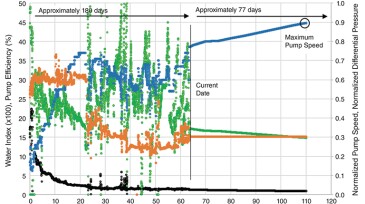
This paper presents a proposed condition indicator that estimates the wear experienced by an all-metal progressing cavity pump at any point in operation and takes into consideration the effects of downhole operating conditions.
-
New sensors and innovative uses of existing technology are allowing access to a variety of data that can be incorporated into integrated work flows and modeling tools for better understanding of the production system. There are initial signs of operations moving toward the use of real-time models.