Production

This paper aims to establish a set of best practices for generating particle-size-distribution data from core samples.

Unlike traditional AI approaches that rely primarily on historical data, physics-based AI integrates physical laws, engineering expertise, and operational constraints directly into the learning process. Three recent SPE papers illustrate how this paradigm is transforming the industry through intelligent condition monitoring, virtual sensing, and autonomous production …

This research focuses on combining physics-based expert rules with machine learning to improve the detection of failure-related events in electrical submersible pumps.
-
 Wellbore tortuosity is a term that has steadily increased in relevance to the oil and gas industry over the past decade, but its importance is especially clear in the current environment.
 -
To have the flexibility to treat both rich and lean gas wells [up to 100% gas volume fraction (GVF)], a new multiphase pump system has been developed by comparing the different boosting systems performance and analyzing well-by-well production scenarios.
-
To further reduce backpressure on low-pressure gas wells and increase reserves in a mature gas field, a gas-ejector project was evaluated and proposed.
-
Present industry solutions to the challenge of well spacing involve expensive geomechanical Earth modeling or fracture-geometry monitoring that is time-consuming, data-intensive, and geography-specific.
-
Primarily used in a few US states, waste-slurry-injection technology could help operators reduce cost, while also potentially reducing their carbon footprint. But the process may still present technical and environmental challenges.
-
The complete paper describes the hurdles that have prevented single-trip installation of upper and lower completions in the complex world of subsea and deepwater applications and examines the processes, technologies, and risk-mitigation steps that took a concept from pilot to successful deployment.
-
The complete paper reviews the results of gas hydrate engineering and production testing studies associated with northern Canada and Alaska.
-
About 16% of US offshore production in the Gulf of Mexico remains offline after Hurricane Laura caused mass evacuations more than a week ago.
-
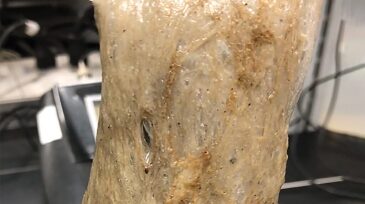
The source of gummy, damaging polymer gunk that has flowed from Oklahoma oil wells is becoming clear, and one of the lessons learned is that shale plays require petroleum engineers to learn more about chemistry.
-
The featured papers and suggested further reading summarize the current SPE literature state of the art for H2S scavenger research and development and have been selected to give readers a broad indication from both academia and industry around the world.