Production

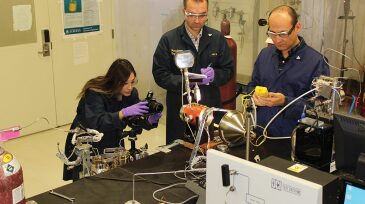
This paper aims to establish a set of best practices for generating particle-size-distribution data from core samples.

Unlike traditional AI approaches that rely primarily on historical data, physics-based AI integrates physical laws, engineering expertise, and operational constraints directly into the learning process. Three recent SPE papers illustrate how this paradigm is transforming the industry through intelligent condition monitoring, virtual sensing, and autonomous production …

This research focuses on combining physics-based expert rules with machine learning to improve the detection of failure-related events in electrical submersible pumps.
-
 The application continuously uses machine-learning algorithms to aggregate historical and real-time data across production operations. Additionally, the application uses a hybrid approach that draws on physics-based and data-driven AI models to generate predictions and prescribed actions.
 -
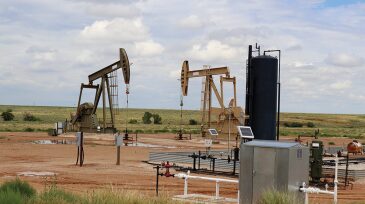
Production data from the oldest horizontal wells in the three largest oil plays in the US show that annual decline rates remain relatively high for a long period of time. This challenges assumptions held about production after 5 years and directly affects reserve and ultimate recovery estimates.
-
Oil companies are considering whether shutting in a well for a month or so may mean stronger production later by allowing more time for water to soak into the rock, which gets it out of the way of the oil and gas. But this is not always effective, and additional work is needed.
-
Production decline with field maturing is a natural phenomenon, but the efforts to mitigate this decline are truly remarkable. Achieving this feat requires not only a deeper understanding of the subsurface process involved but also a total synergy between the various disciplines engaged.
-
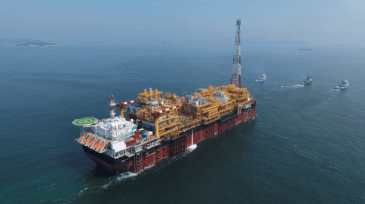
The XamXung field offshore Sarawak, Malaysia, is a 47-year brownfield with thin remaining oil rims that have made field management challenging. The dynamic oil-rim movement has been a key subsurface uncertainty, particularly with the commencing of a redevelopment project.
-
To predict liquid-loading tendencies and to identify opportunities for production enhancement, the performance of 150 gas wells was analyzed in two gas fields in India.
-
The complete paper explores technical and economic development options to produce heavy-oil resources at commercial rates and showcases three optimization scenarios of higher recovery efficiency aimed at increasing net present value at the basin level.
-
The largest natural gas field in the rising Eastern Mediterranean region is now flowing after being discovered a decade ago.
-
Approved in October, the Flow Measurement Technical Section will help engage the greater SPE technical community in flow-measurement-related issues and technologies. It will cover the full spectrum of flow measurement, including single-phase and multiphase flow.
-
Total has agreed to acquire interests in two blocks in the offshore Kwanza Basin from Angola’s state-owned Sonangol and has received an extension on its offshore Block 17 production licenses.