Production

This paper aims to establish a set of best practices for generating particle-size-distribution data from core samples.

Unlike traditional AI approaches that rely primarily on historical data, physics-based AI integrates physical laws, engineering expertise, and operational constraints directly into the learning process. Three recent SPE papers illustrate how this paradigm is transforming the industry through intelligent condition monitoring, virtual sensing, and autonomous production …

This research focuses on combining physics-based expert rules with machine learning to improve the detection of failure-related events in electrical submersible pumps.
-
 Just as the unconventional revolution has transformed our industry during the past decade, it has also dominated the world of artificial lift. In fact, it can be difficult to find an artificial lift paper these days that does not address, in some way, artificial lift systems in unconventional wells.
 -
Natural-gas wells suffer from liquid loading if the gas-flow rate is insufficient to carry liquids to the surface. Because of the technique’s many advantages, plunger lift has been used widely in gas wells for the removal of liquid columns and the rescue of dying gas wells from liquid loading.
-
This paper presents the results of a 3-year project aimed at mass field implementation of ultrahigh-speed (UHS) electric submersible pump (ESP) systems in western Siberia.
-
Production monitoring requires heightened degrees of precision and efficiency as operations are streamlined and projects are evaluated continuously. This month’s feature focuses on innovative technologies that have been implemented in environments ranging from the Gulf of Mexico to China.
-
The complete paper explains the steps taken to improve surveillance of beam pumps using dynamometer-card data and machine-learning techniques and reviews lessons learned from executing the operator’s first artificial intelligence project.
-
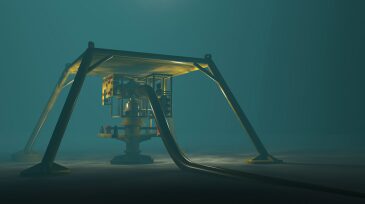
This paper identifies potentially significant hidden value of subsea multiphase boosting technology, or aspects of it that have not received adequate attention during the field-development decision-making process.
-
The motto of the Olympic Games is “Citius, Altius, Fortius,” Latin for “faster, higher, stronger,” which emphasizes the concept of pushing the limits. As an engineer, that approach really speaks to me—and offshore installations, and especially offshore tiebacks, illustrate that concept very well.
-
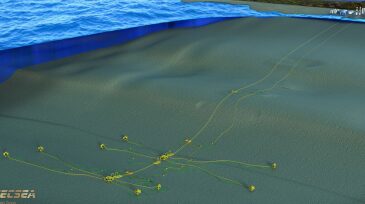
Eni conducted a research project to explore the maturity of new technologies to enable economical development of deepwater prospects with tieback distances longer than 50 km and 150 km, respectively, for oil and gas fields.
-
This case study describes how gas condensates within a subsea tieback system behave very differently to condensed water from a wet-gas system and therefore a pseudo dry-gas system needs to be configured differently for gas-condensate developments.
-
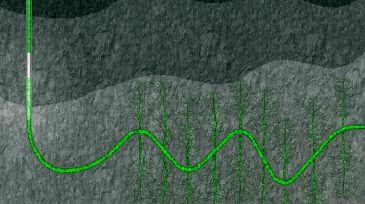
SponsoredLiquid loading is declining the production rates and limiting the ultimate recovery of shale gas wells. This article explains how subsurface compression can remove liquids from the horizontal and vertical wellbores and increase one operator’s production by 67%.