Production

This paper aims to establish a set of best practices for generating particle-size-distribution data from core samples.

Unlike traditional AI approaches that rely primarily on historical data, physics-based AI integrates physical laws, engineering expertise, and operational constraints directly into the learning process. Three recent SPE papers illustrate how this paradigm is transforming the industry through intelligent condition monitoring, virtual sensing, and autonomous production …

This research focuses on combining physics-based expert rules with machine learning to improve the detection of failure-related events in electrical submersible pumps.
-
 SponsoredMany oilfield applications involve use of slurries. But sedimentation of the additives that started out as powders can create problems and reduce effectiveness. A new easy to use, liquid polymer additive from BYK is the solution you need.
 -
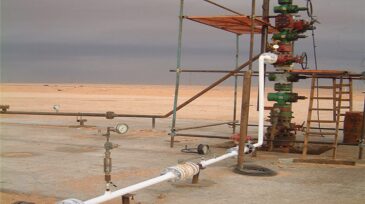
Hassi Messaoud is a mature oil field with more than 1,100 production wells. Approximately half of the wells are natural flow and the other half use continuous gas lift (CGL) with concentric (CCE) strings.
-
First oil from the 120,000-B/D Liza Destiny floating production, storage, and offloading vessel, which arrived on the block in late August, is targeted for December.
-
The Esox-1 well encountered 58 m of high-quality oil-bearing Miocene reservoirs and will be tied back to Tubular Bells production facilities.
-
The Sidri 36 appraisal well confirmed the downdip westward extension of the Sidri 23 discovery announced last July by the Italian major.
-
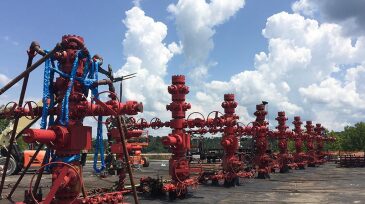
The time it takes for a shale producer to drill a well has been a major focus for the past decade. A new report says the industry should place equal weight on how long it takes a well to actually deliver first oil.
-
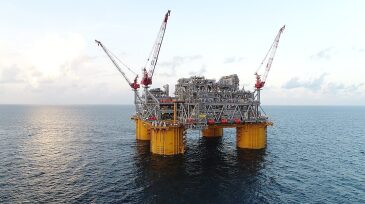
New projects coming on stream will boost US gulf oil output to 1.9 million B/D in 2019 and 2 million B/D in 2020, EIA projects.
-
Nanotechnology has great potential to reduce cost, increase production, and even improve the sustainability of E&P operations. But, where do we stand in terms of potential vs. reality? And, is the industry ready and willing to use the technology?
-
This paper details the design and execution of what the authors say they believe is the first successful frac-pack operation in a previously gravel-packed well.
-
Remote and integrated operations can make production safer and more efficient. Despite this, the industry has struggled to implement these clearly effective techniques.