Production

This paper aims to establish a set of best practices for generating particle-size-distribution data from core samples.

Unlike traditional AI approaches that rely primarily on historical data, physics-based AI integrates physical laws, engineering expertise, and operational constraints directly into the learning process. Three recent SPE papers illustrate how this paradigm is transforming the industry through intelligent condition monitoring, virtual sensing, and autonomous production …

This research focuses on combining physics-based expert rules with machine learning to improve the detection of failure-related events in electrical submersible pumps.
-
 The benchmark comes as operator Eni solidifies concession agreements and ramps up exploration and development in the North African country.
 -
A company is selling a new well testing tool designed to be a cheaper, simpler way to do fiber optic sensing, and then it fades away.
-
A marked change from a decade ago, Appalachia, the Permian, and the Haynesville now represent almost half of total US gas production, EIA reports.
-
Production from older wells in the Permian Basin is declining faster than widely assumed, according to a new study. If this trend holds, it could lead to problems for companies that are depending on those wells to pay for future development or to justify a big acquisition.
-
BP has seen enormous payoff from a program to intervene in underperforming subsea wells in the Gulf of Mexico.
-
The 2018 Legends of Artificial Lift are announced. Recipients will be honored at the 2018 SPE Artificial Lift Conference and Exhibition to be held in The Woodlands, Texas.
-
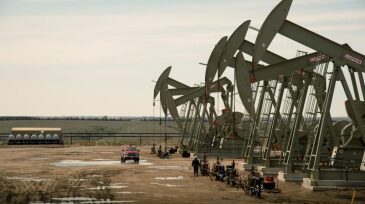
Hundreds of rod-lift wells in North Dakota are about to get a big upgrade.
-
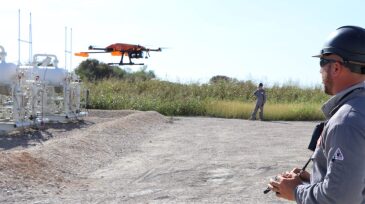
Venture groups spend their time evaluating hundreds of companies each year to only make a handful of investments. These two cover interesting ends of the upstream spectrum: aerial drones and downhole artificial lift.
-
The $28-billion Shah Deniz Phase 2 project off Azerbaijan will supply gas to Europe through the Southern Gas Corridor pipeline system.
-
In Australia’s Surat Basin, gas is contained in hundreds of coal seams, which have highly variable properties and are grouped into four distinct reservoir zones of similar qualities.