Production

This paper aims to establish a set of best practices for generating particle-size-distribution data from core samples.

Unlike traditional AI approaches that rely primarily on historical data, physics-based AI integrates physical laws, engineering expertise, and operational constraints directly into the learning process. Three recent SPE papers illustrate how this paradigm is transforming the industry through intelligent condition monitoring, virtual sensing, and autonomous production …

This research focuses on combining physics-based expert rules with machine learning to improve the detection of failure-related events in electrical submersible pumps.
-
 Polymer gel is frequently used for conformance control in fractured reservoirs, where it is injected to reside in fractures or high-permeability streaks to reduce conductivity. This paper discusses the behavior and blocking capacity of gel during chase waterflooding.
 -
This paper focuses on a numerical-modeling analysis of the acid-gas-injection (AGI) scenario in carbonate HP/HT reservoirs, and presents the way in which AGI impacts asphaltene-precipitation behavior.
-
The 2016 SPE Legends of Artificial Lift are announced. Recipients will be honored at the 2016 SPE Artificial Lift Conference and Exhibition for North America to be held this month.
-
In the past decade, analytics in the oil field has grown to be a major discipline, integrally supporting the application of many different types of production chemicals and becoming viewed by some as a technology differentiator.
-
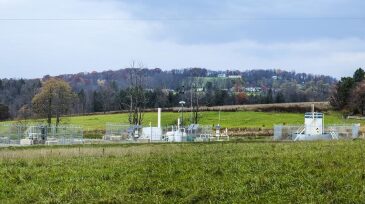
In this work, the authors perform automatic decline analysis on Marcellus Shale gas wells and predict ultimate recovery for each well.
-
For nearly a decade, Saudi Aramco has been studying how altering the chemical makeup of seawater injected into its reservoirs can increase production. The result is "smart water" that can boost the sweep effectiveness of a waterflood.
-
An auction of small discoveries that were passed over by India’s national oil companies is a test of the country’s efforts to boost oil and gas development by encouraging participation from inside and outside this energy-hungry country.
-
This paper presents a state-of-the-art review of scale-inhibitor-analysis techniques and describes how these techniques can be used to provide cost-effective scale management.
-
This paper describes a novel method of chemical dosage based on time-resolved fluorescence (TRF) that allows a simple, accurate, and efficient quantification of chemicals below parts-per-million ranges, even for double (scale/scale, scale/corrosion) quantification.
-
The deep-ocean Raman in-situ-spectrometer (DORISS) instruments were developed for the purposes of identifying compounds and studying in-situ chemical reactions in a nondestructive manner while working with solids, liquids, and gases.