R&D/innovation

A shared digital mindset across subsurface, subsea, and drilling and wells is accelerating well planning at Vår Energi.

With funding opportunities improving, developers and researchers are focused on shortening project learning cycles and reducing uncertainty to attract more capital and speed deployment.
By integrating reservoir simulation, probabilistic seismic hazard and risk assessment, and machine learning, this study provides a practical framework for translating complex geoscientific research into evidence-based policy and field operations, achieving measurable reductions in seismic risk indicators in the Groningen gas field.
-
 Seven years, and we’re on track to exceed the 1.5°C target established by the Paris Agreement in 2015 to limit global warming by 2030. Instead, we may be turning up the heat to 3.0°C. And in this case, doubling the wager does not hold potential for greater rewards. A recent report addressed the costs of technologies for emissions mitigation and their likelihood of mak…
 -
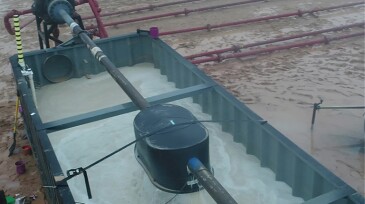
A team of engineers did something no one had done before: a full-scale fracturing test on the surface. The results surprised the fracturing experts involved.
-
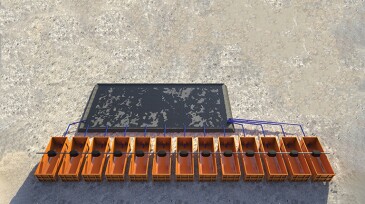
The message from a single chart’s data from the first full-scale hydraulic fracturing surface test is simple: Far less proppant flows out of the first clusters passed in a stage than the last ones.
-
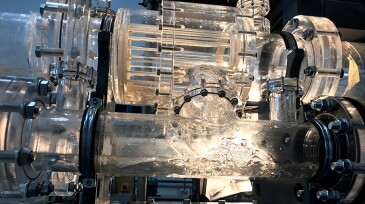
A system that could help turn stranded-gas fields into producing projects has moved closer to reality, aided by the growing focus on reductions in carbon emissions.
-
Many OFS companies have pulled away from the unconventional resources and redirected their efforts into alternate energy and clean technology. There is a limited bucket of money available for these companies to invest in new technology, and with every dollar diverted to ESG, those dollars are taken away from traditional technologies.
-
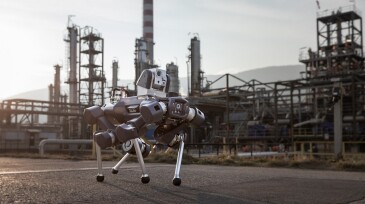
Swiss robotics company ANYbotics introduced ANYmal X, the first explosion-proof legged robot, at the Offshore Technology Conference Asia.
-
The center will develop innovations for renewable-energy technology and the low-carbon future and will bring together and support research of faculty in the energy, materials science, data science, and artificial-intelligence fields.
-
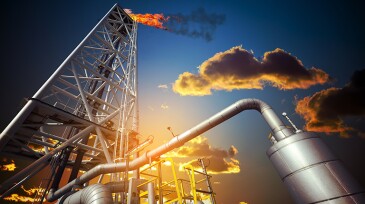
Oil producers encountering pockets of methane typically use flare stacks to burn off the vented gas. However, winds blowing across conventional open flame burners often result in 40% or more of the methane escaping into the air.
-
Gazprom Neft and a cloud computing joint venture involving Abu Dhabi National Oil Company have signed an agreement to commercialize jointly developed digital solutions in Russia and the Middle East.
-
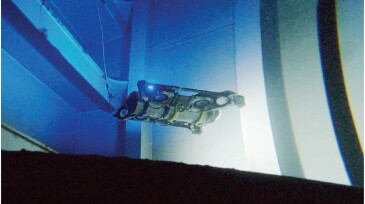
Tested within a full ballast water tank on a North Sea FPSO, the ROV collected visual inspection data, validating system performance including wireless navigation and wireless communication.