R&D/innovation

With funding opportunities improving, developers and researchers are focused on shortening project learning cycles and reducing uncertainty to attract more capital and speed deployment.
By integrating reservoir simulation, probabilistic seismic hazard and risk assessment, and machine learning, this study provides a practical framework for translating complex geoscientific research into evidence-based policy and field operations, achieving measurable reductions in seismic risk indicators in the Groningen gas field.

The US Department of Energy has awarded more than $99 million to 21 projects that will advance geothermal development through field-scale testing of next-generation technologies and exploration drilling programs across the US.
-
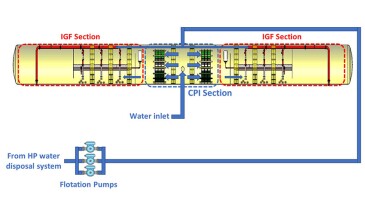
 The retrofit merged enhanced gravity separation with induced gas flotation within the same vessel. Detailed insights into the design, operation, and performance of hybrid flotation systems are provided, offering valuable guidance for similar initiatives in the petroleum industry.
 -
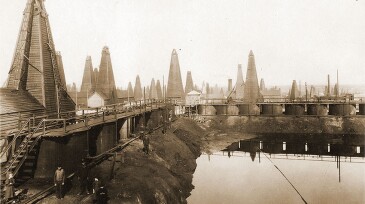
As Azerbaijan prepares to host COP29, JPT looks back at how the country prospered for millennia on its largess of oil and gas and its unique geography along the ancient Silk Road that today is traversed by pipelines delivering gas and oil to Europe from the depths of the Caspian Sea.
-
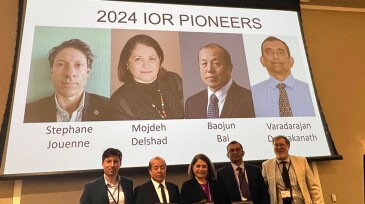
The honor recognizes recipients for their lasting and significant contributions in the field of IOR.
-
Pilots and papers are plentiful, but the shale sector has no big enhanced oil recovery projects to speak of. It may just have to stay that way for a while.
-
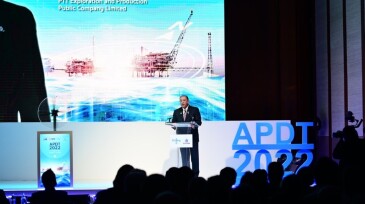
The SPE/IADC Asia Pacific Drilling Technology Conference and Exhibition will offer opportunities to exchange views, deliberate solutions for prevailing challenges, and enhance operational efficiency through collaboration and sharing of best practices.
-
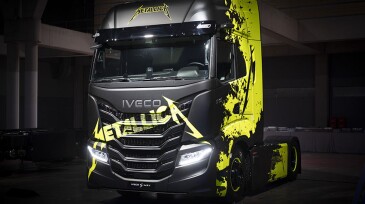
A new kind of groupie is interested in the heavy metal band Metallica’s tour in Europe, including Shell, big-rig and electric vehicle manufacturers, and producers of hydrogen, biofuels, and LNG. It has less to do with the music than the alternative fuels keeping the buses rolling on the 2-month, 7,200-mile journey across nine countries.
-
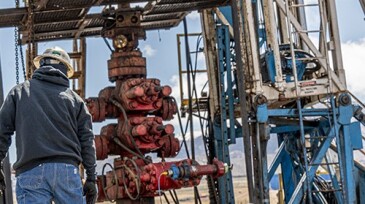
Years in the making, the program sponsored by the US Department of Energy is celebrating its latest geothermal energy breakthrough in southwestern Utah.
-
The world's largest oil and gas company has selected French firm Pasqal to provide it with a 200-qubit quantum computer.
-
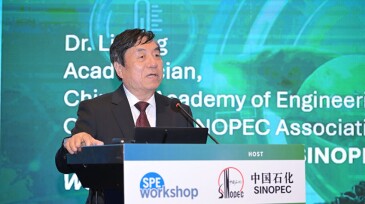
The inaugural SPE Workshop on CCUS Management in China was held in April in Qingdao. The workshop highlighted recent advances and technical challenges in CCUS management and attracted 104 attendees representing 19 organizations from eight countries.
-
The Norwegian oil company said it may spend more than $130 million to get in on the emerging lithium brine business in Texas and Arkansas.