Reservoir characterization

Known as Arena, the collaboration aims to improve decision-making across increasingly complex reservoirs and growing volumes of subsurface data.

Three papers are highlighted as the primary contributions because of their broad industry relevance. They focus on improving formation particle-size characterization, expanding the application of openhole gravel packs in depleted and compartmentalized reservoirs, and advancing the understanding of capillary pressure in sand production.

By integrating experimental and mathematical modeling approaches, this work aims to advance the understanding of sand-detachment dynamics and formation instability under varying saturation conditions.
-
 This paper discusses the successful, fully integrated, 3D Earth modeling (EM) and dynamic reservoir simulation of the Hollin Formation in the Lago Agrio Field within an operator’s first producer field in Ecuador.
 -
A recently launched joint industry project (JIP) is working to improve petrophysical analysis methods to reduce the time and expense of characterizing tight sandstone gas reservoirs for exploration, appraisal, and production.
-
A new technique that analyzes scanning electron microscope (SEM) images of formation samples has been used to measure porosity and total organic carbon (TOC) in the Wolfcamp Shale of the Delaware Basin in west Texas.
-
The story of unconventional oil and gas technology development has been focused on fractures. The formula has been more stages, more sand, and more water, targeting the most productive spots.
-
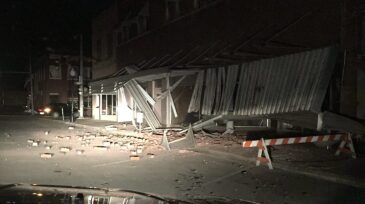
Earthquake in Cushing, OK -- home to the largest oil storage facility in the world -- leads to further regulatory action on disposal wells in the area.
-
Understanding petrophysical properties well enough to make drilling decisions, particularly for tight gas can be a challenge. A new computer system aims to help analyze the extensive data involved.
-
Partitioning interwell tracer tests (PITTs) have been used to estimate remaining oil saturations (ROSs) during waterflooding.
-
In this study, the authors demonstrate a reliable, cost-effective methodology that empowers shale operators with reservoir data on every well.
-
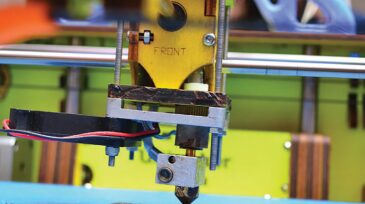
Researchers at Heriot-Watt University in Edinburgh, Scotland, are building replica core samples using 3D printers and installing sensors inside them as they go. Their goal is to directly monitor pore-scale flow behavior from the inside of these so-called “smart rocks.”
-
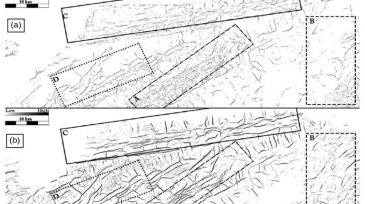
The tedium of identifying small faults in often murky seismic images pushed Dustin Dewett, an associate geophysicist for BHP Billiton, to develop a better way to use the tools at hand.