Reservoir characterization

Known as Arena, the collaboration aims to improve decision-making across increasingly complex reservoirs and growing volumes of subsurface data.

Three papers are highlighted as the primary contributions because of their broad industry relevance. They focus on improving formation particle-size characterization, expanding the application of openhole gravel packs in depleted and compartmentalized reservoirs, and advancing the understanding of capillary pressure in sand production.

By integrating experimental and mathematical modeling approaches, this work aims to advance the understanding of sand-detachment dynamics and formation instability under varying saturation conditions.
-
 Over the past year, despite the naysayers’ comments and predictions, the usual creativity and ingenuity of engineers and scientists in the oil industry were ubiquitous.
 -
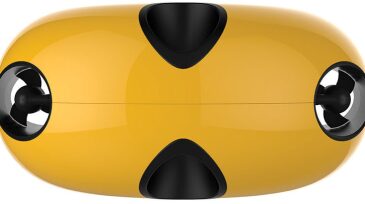
Autonomous Robotics’ first offering is built around a rounded yellow device that looks like a little flying saucer.
-
Seismic innovators are working on new sound sources designed to produce better subsurface images while addressing concerns raised by scientists and regulators about the environmental impact of the related noise on sea life.
-
Rising demand for flowback technologies to reduce uncertainties is leading to the creation of more hydrocarbon and water tracers. These chemical-based tracers may play an important role in the shale industry’s effort to come up with more cost-effective fracture designs.
-
An area of great interest to those researching flowback is the interaction of water and salt inside the shale reservoir. After a well is stimulated, the flowback fluids tend to show a rising concentration of salt that falls back to near zero over time.
-
A surge in earthquakes tightly clustered in southern Kansas that followed the large increase in produced water injections prompted the state to cut the daily limits on disposal wells in that area to see if that will help solve the problem.
-
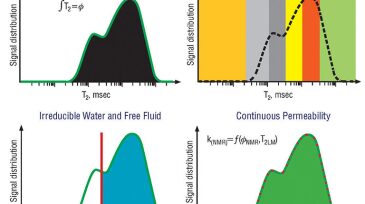
Reservoirs consisting of heterogeneous carbonates and shaly sands pose formation evaluation challenges for conventional logging-while-drilling (LWD) measurements. Magnetic resonance techniques hold promise for improving understanding of these reservoirs.
-
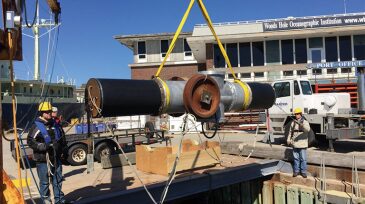
More than 50 years after inventing the air gun, Stephen Chelminski is working on a new version of the industry standard designed to be more in tune with the current needs of the industry and its regulators.
-
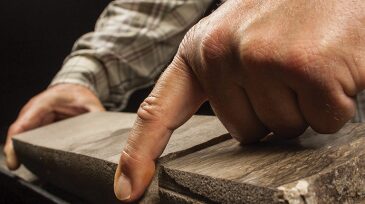
Pulled directly from the reservoir rock, core samples provide critical data used to determine how exploration should proceed. Until recently, core analysis remained old school, however, there is an ongoing transition to bring the process of core description into the digital age.
-
New seismic data gathering techniques promise better images for less by gathering more data quicker, seeing past obstructions, and seeking out scarce frequencies.