Reservoir characterization

Known as Arena, the collaboration aims to improve decision-making across increasingly complex reservoirs and growing volumes of subsurface data.

This study explores the carbon-capture and mineralization potential of ultramafic rock powders when exposed to flue gases generated from combustion of crude oil and mesquite-derived charcoal.

Three papers are highlighted as the primary contributions because of their broad industry relevance. They focus on improving formation particle-size characterization, expanding the application of openhole gravel packs in depleted and compartmentalized reservoirs, and advancing the understanding of capillary pressure in sand production.
-
 This case study from SLB and offshore producer PRIO describes the longest openhole section in Latin America with the highest extended-reach drilling ratio in Brazil’s history.
-
The company says the service is designed to advance geosteering capabilities in complex drilling environments.
-
The paper describes the revalidation of a deepwater prospect that resulted in a no-drill decision.
-
The objective of this study is to numerically investigate system behavior when storing H2/natural gas (CH4) mixtures in aquifer-related underground gas storage, and the effect of gas composition and salinity on energy-recovery efficiency.
-
The authors describe the effectiveness of an electromagnetic look-ahead service while drilling in terms of providing accurate formation profiles ahead of the bit to optimize geostopping efficiency.
-
In the past year, publications on CO2, natural gas, and hydrogen storage have increasingly focused on the design, evaluation, and optimization of storage plans. These efforts encompass a broad spectrum of challenges and innovations, including the expansion of storage reservoirs from depleted gas fields and saline aquifers to stratified carbonate formations and heavy-o…
-
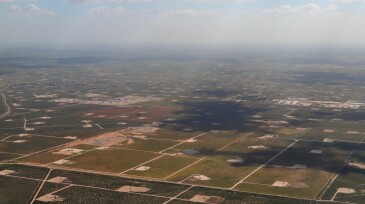
This study reveals how production-induced depletion and geomechanical stress changes influence child-well performance in the Midland Basin, combining coupled simulations and machine learning to guide optimal well spacing, timing, and placement for infill development.
-
This study integrates recently developed formation testing with advanced petrophysical logging to address limitations of traditional methods in volcanic breccia formations.
-
This Technology Focus highlights three developments in formation evaluation related to measurement, interpretation, and integration.
-
This paper compares deep transient testing with drillstem testing in a high- and low-permeability gas reservoir, including test-selection implications and best practices.