Reservoir characterization

The industry is no longer short of measurements; the real challenge is converting them into timely reservoir decisions that protect value. That challenge is becoming more urgent as the industry depends increasingly on mature fields and existing infrastructure. The selected papers show how this need is being addressed across different producing regions.

This paper presents a case study from a mature field redevelopment project where pulsed neutron logging was integrated with advanced reservoir modeling to improve the understanding of fluid-contact dynamics and optimize new horizontal well placement.

This paper aims to showcase examples of how integrated analysis of surveillance data in the Azeri-Chirag-Gunashli field has improved reservoir understanding and informed reservoir-management decisions.
-
 In Part 2 of a series of articles, the author focuses on generating a connection between the problem types and various methods of trying to solve these problems.
 -
Artificial intelligence (AI) tools have been used in geological survey methods for many years. Gaining insight into the scale and trends of this implementation could assist surveyors in making informed decisions about buying or developing new technologies.
-
This paper describes the building of a geomechanical model for an offshore field that integrated drilling, geology, petrophysics, and reservoir data to play a major role in the drillability and deliverability of the reservoir.
-
The authors of this paper present an approach integrating characterization of paleo zones, parameterization of paleo-zone conductivity, and application of flow profiles in a history-matching study of a dual-porosity/dual-permeability model.
-
The coupled geomechanical and dynamic flow simulation work flow described in this paper relies on a multidisciplinary approach to meet future peak gas demands and support clean-energy initiatives.
-
In Part 1 of a series of articles, the author highlights candidate selection and problem clarification. This section describes how the success rate of solving conformance problems is improved by reducing assumptions and improving your problem understanding prior to executing a solution.
-
This paper presents the results of a comprehensive study performed to improve understanding of deep bottom-up water injection, which enabled optimizing the recovery of a heavy oil field in South Oman.
-
This paper presents an automated calibration process, probabilistic infill well ranking, and location optimization for a major heavy oil field in Colombia with original oil in place of more than 5 million STB.
-
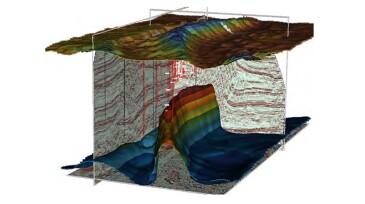
Researchers are building a comprehensive database of hundreds of salt domes to help expand subsurface hydrogen storage in the US.
-
This article presents a new data-driven analysis to locate low-frequency seismic sources, referred to as near-infrasound or infrasound sources. Combining these infrasound signals with microseismicity signals allows for better characterization and monitoring of the stimulated reservoir volume.