Reservoir characterization

This paper presents a case study from a mature field redevelopment project where pulsed neutron logging was integrated with advanced reservoir modeling to improve the understanding of fluid-contact dynamics and optimize new horizontal well placement.

This paper aims to showcase examples of how integrated analysis of surveillance data in the Azeri-Chirag-Gunashli field has improved reservoir understanding and informed reservoir-management decisions.

This work applies fuzzy logic, a well-established artificial-intelligence technique, to quantitatively assess connectivity between injectors and producers in a giant presalt field in the Santos Basin of Brazil.
-
 This work evaluates and compares the performance of rate normalization and pressure deconvolution for both synthetic and tight-oil examples.
 -
The authors describe an approach to achieve reliable estimation of field gas initially in place.
-
The COVID-19 pandemic naturally has affected SPE meetings, causing many to be rescheduled or postponed indefinitely, but SPE papers continue to be a crucial source of technical knowledge. The selected papers explore simple and complex innovative approaches toward reservoir characterization to work around the absence of certain data.
-
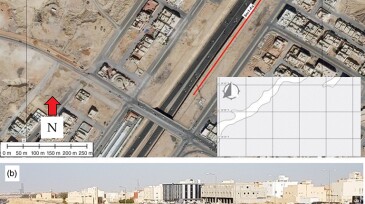
The authors describe an integrated multiscale data methodology involving machine-leaning tools applied to the Late Jurassic Upper Jubaila formation outcrop data.
-
The authors develop a collocated finite-volume method to study induced seismicity as a result of pore-pressure fluctuations.
-
This paper describes the application of a synthetic seismic-catalog-generation method followed by application of a neural network on a seismic data set for an oil-producing field in the North Sea.
-
This paper describes an integrated work flow developed for 3D seismic reservoir characterization of deep and thin layers without sufficient well data in a South China Sea formation.
-
The author writes that careful calibration of a common, simple rock physics model can provide valuable insights into reservoir and seal elastic properties.
-
Two well-test logging operations have been carried out for the first time in a conventional carbonate reservoir in safe operating conditions and with repeatable results.
-
The past couple of years has been a rollercoaster for energy professionals, but it did not stop the incredible achievements in machine-learning (ML) techniques, particularly neural networks to improve seismic imaging.