Reservoir characterization

This paper presents an experiment investigating dissolution of basaltic primary minerals and conditions favorable for secondary phase formation under deep subsurface storage conditions.

The industry is no longer short of measurements; the real challenge is converting them into timely reservoir decisions that protect value. That challenge is becoming more urgent as the industry depends increasingly on mature fields and existing infrastructure. The selected papers show how this need is being addressed across different producing regions.

This study aims to investigate the efficacy of chemical additives strontium chloride and barium hydroxide in accelerating CO₂ trapping mechanisms, their effect on dissolution of carbonate-bearing minerals, and resulting poroelastic changes in the host rock.
-
 Acquiring new 3D broadband seismic data of a gas field containing legacy 3D conventional towed-streamer seismic data.
 -
The integration of microseismic data with 3D seismic attributes, and well log and completions data is used to understand geomechanical rock properties.
-
Understanding how much rock is being stimulated and propped is critical for unconventional producers. New imaging methods using electromagnetic energy or acoustic microemitters could represent a milestone in understanding what is left behind after fracturing.
-
This work presents a real field example in which the integration of well-testing and geological interpretations increased the understanding of a complex, heterogeneous reservoir.
-
Although the wellbore is in a nonisothermal environment, heat transfer between the fluid in the wellbore and the formation is often ignored and temperature is usually assumed constant in data interpretation, which will lead to misunderstanding of the pressure profile.
-
The Pugang gas field, one of the biggest inland gas discoveries of the last decade in China, has hydrogen sulfide (H2S) concentrations as high as 10%, making surface- and downhole-facilities design and execution challenging.
-
Over the past year, despite the naysayers’ comments and predictions, the usual creativity and ingenuity of engineers and scientists in the oil industry were ubiquitous.
-
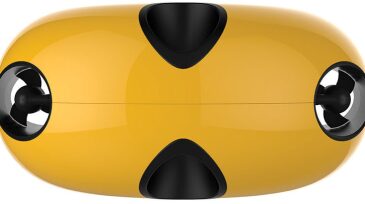
Autonomous Robotics’ first offering is built around a rounded yellow device that looks like a little flying saucer.
-
Seismic innovators are working on new sound sources designed to produce better subsurface images while addressing concerns raised by scientists and regulators about the environmental impact of the related noise on sea life.
-
Rising demand for flowback technologies to reduce uncertainties is leading to the creation of more hydrocarbon and water tracers. These chemical-based tracers may play an important role in the shale industry’s effort to come up with more cost-effective fracture designs.