Reservoir characterization

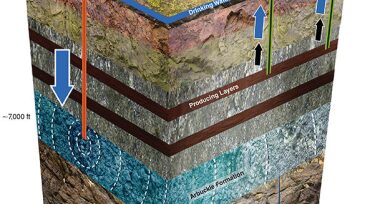
This paper presents an experiment investigating dissolution of basaltic primary minerals and conditions favorable for secondary phase formation under deep subsurface storage conditions.

The industry is no longer short of measurements; the real challenge is converting them into timely reservoir decisions that protect value. That challenge is becoming more urgent as the industry depends increasingly on mature fields and existing infrastructure. The selected papers show how this need is being addressed across different producing regions.

This study aims to investigate the efficacy of chemical additives strontium chloride and barium hydroxide in accelerating CO₂ trapping mechanisms, their effect on dissolution of carbonate-bearing minerals, and resulting poroelastic changes in the host rock.
-
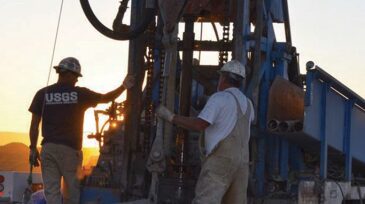
 The list of the biggest gas plays in the US is being revised as the US Geological Survey creates new estimates based on additional drilling results and available rock samples. New at Number 2 is the Mancos Shale on the Western Slope of the Rockies with 66 Tcf in recoverable reserves.
 -
This paper describes how seismic reservoir integration, advanced production analysis, and accurate nanoscale and 3D full-field simulations may address profitability issues and help oil companies to be more efficient in developing unconventional portfolios.
-
In an effort to foster collaboration in an area where there is currently very little, researchers at the University of Texas at Austin (UT) created a new web-based application for storing and sharing CT images of rocks.
-
For the past 2 decades, the use of DNA sequencing technology has largely been relegated to the domains of criminal forensics and the healthcare industry. One company is betting that the shale industry soon will join that list.
-
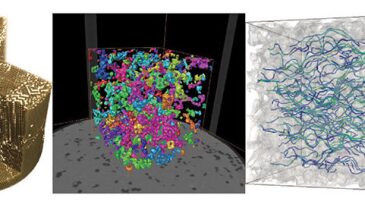
A company known for being a pioneer in methods built on imaging ultratight rock at the core level has built a business testing drilling cuttings to help identify productive, fracturable rock to help operators design better completions.
-
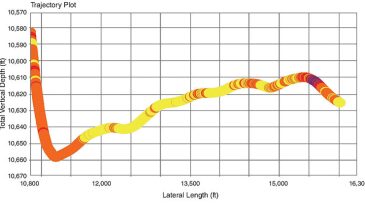
The force required to drill through a rock is a direct test of its strength and stiffness. Developing a reliable measure of the properties of rock based on the force required to drill a long lateral is a large challenge.
-
One of the biggest ways to lower the cost of production from shale would be to identify zones that are productive, or not, before fracturing them.
-
Industry regulators in Oklahoma have rolled out broad new restrictions on more than 600 disposal wells as part of the largest action of its kind taken in response to earthquakes.
-
Understanding how much rock is being stimulated and propped is critical for unconventional producers. New imaging methods using electromagnetic energy or acoustic microemitters could represent a milestone in understanding what is left behind after fracturing.
-
The world’s first reflection seismic field tests were conducted near Oklahoma City in 1921, and, ever since then, the industry has endeavored to improve that seismic imaging process.