Reservoir characterization

This paper presents a case study from a mature field redevelopment project where pulsed neutron logging was integrated with advanced reservoir modeling to improve the understanding of fluid-contact dynamics and optimize new horizontal well placement.

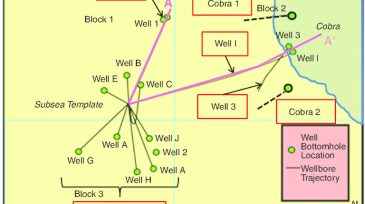
This paper aims to showcase examples of how integrated analysis of surveillance data in the Azeri-Chirag-Gunashli field has improved reservoir understanding and informed reservoir-management decisions.

This paper presents an experiment investigating dissolution of basaltic primary minerals and conditions favorable for secondary phase formation under deep subsurface storage conditions.
-
 FEI is a maker of high-powered microscopes whose growth plan in exploration and production includes building a service company.
 -
The process of risk and uncertainty reduction in unconventional-drilling operations starts with improving techniques for pore-pressure modeling.
-
To achieve optimal production from unconventional reservoirs, it is useful to determine the permeability, pore pressure, and state of stress of rock strata.
-
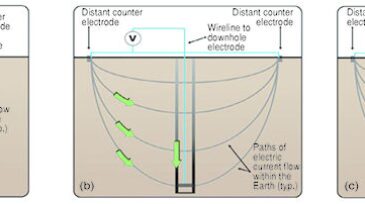
Add a new possible use for downhole casing: It can serve as broadcast antennae.
-
The development of an economically efficient drilling program in shale-gas plays is a challenging task, requiring a large number of wells; even with many wells, the average well production and the variation of well performance (economics) remain highly uncertain.
-
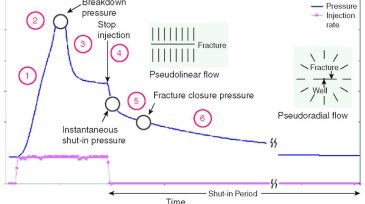
This paper attempts to describe some of the common problems and to help prevent some common errors often observed in diagnostic fracture injection tests (DFITs) execution and analysis.
-
Analytical tools are useful for reservoir management and can provide simplicity while capturing information derived from events occurring at smaller time scales, which are ordinarily sacrificed in numerical simulations to keep run times reasonable.
-
Understanding well and reservoir performance is the ultimate goal of data gathering.
-
The Earth is complex in all directions, and hydrocarbon traps require closure—whether structural or stratigraphic or both—in three dimensions.
-
Applying a cutoff consists of defining a threshold value on one or more logs to separate the reservoir intervals in which hydrocarbons are mobile from the gross rock thickness.