Reservoir simulation

This article from the SPE Integrated Reservoir Management Technical Section (IRMTS) examines the closed-loop IRM approach, from insight to execution to learning, and the limits of technology-driven solutions.

This paper presents a case study from a mature field redevelopment project where pulsed neutron logging was integrated with advanced reservoir modeling to improve the understanding of fluid-contact dynamics and optimize new horizontal well placement.

This paper aims to showcase examples of how integrated analysis of surveillance data in the Azeri-Chirag-Gunashli field has improved reservoir understanding and informed reservoir-management decisions.
-
 The objective of this study was to establish an efficient optimization work flow to improve vertical and areal sweep in a sour-gas injection operation, thereby maximizing recovery under operation constraints.
 -
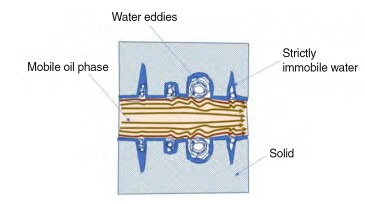
The objective of this paper is to present a fundamentals-based model of three-phase flow consistent with observation that avoids the pitfalls of conventional models such as Stone II or Baker’s three-phase permeability models.
-
A new program offers an affordable way to figure out if salt precipitation could be behind underperforming gas wells and suggests a path to higher production.
-
In an industry where methane leaks and carbon dioxide storage are increasingly important concerns, finding new ways to seal leaks is a valuable skill.
-
Several options exist for large-scale hydrogen underground storage: lined caverns, salt domes, saline aquifers, and depleted oil/gas reservoirs. In this paper, a commercial reservoir simulator was used to model cyclic injection/withdrawal from saline aquifers and depleted oil/gas reservoirs. The results revealed the need to contain the stored volume with an integrated…
-
The authors of this paper present an approach integrating characterization of paleo zones, parameterization of paleo-zone conductivity, and application of flow profiles in a history-matching study of a dual-porosity/dual-permeability model.
-
The authors of this paper develop a robust history-matched reservoir simulation model capable of predicting polymerflooding performance in the first such pilot to enhance heavy oil recovery on Alaska’s North Slope.
-
One of the more common characteristics of heavy oil reservoirs is a low primary recovery factor, which is mainly because of unfavorable mobility ratios between oil and water, negligible solution drives, and faster decline of reservoir pressures because of relatively low oil compressibility. Most of the technologies that apply to heavy oil reservoirs need to address th…
-
The authors of this paper define a work flow that constrains solutions that match models and field observations and obtains a more-representative model for forecasting and optimizing fracture behavior.
-
The opening ceremony highlighted maximizing production sustainably to meet global demand, integration of simulation and optimization in a single platform with automation, and energy security.