Reservoir

Industry experts at URTeC assessed more than a decade of unconventional growth while discussing where productivity gains will come from next.
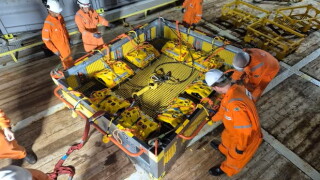
The technology has passed its first phase of qualification, with 84 nodes placed on the seafloor at a depth of 2,000 m to acquire 4D seismic data in the pre-salt Santos Basin.

Chevron and Halliburton describe how they built and deployed the fully autonomous closed-loop fracturing system that enables subsurface-driven optimization.
-
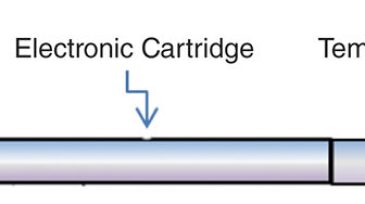
 The objective of this study was to look at factors that can affect a temperature log and steps that can be taken to improve temperature-measurement accuracy.
 -
This paper presents a data set involving the pumping of multiple, unique chemical tracers into a single Wolfcamp B fracture stage.
-
The complete paper describes a physics-based model of interference and a sensitivity study to propose guidelines for well spacing and a drilling timeline for multiple horizontal wells in the Vaca Muerta shale.
-
The Russian company has built a computing cluster in St. Petersburg designed to generate digital twins of oil fields. The new distributed-computing system is capable of processing more than 100 gigabits per second, speeding up the digital-modeling process five-fold.
-
A fracturing test site in West Virginia has quietly made a data trove available on the website of the Marcellus Shale Energy and Environment Lab.
-
In this paper, the authors discuss the characterization process for GR tools and how they behave in boreholes different from the one used in the University of Houston (UH) GR characterization pit.
-
This paper introduces a new core-analysis work flow for determining resistivity index (RI), formation factor (FF), and other petrophysical properties directly from an as-received (AR) set of core samples.
-
Formation evaluation drew special attention at the 2019 International Petroleum Technology Conference Education Week in Beijing, 24–28 March 2019. The student team that worked on Integrated Formation Evaluation for Resources Exploration and Reservoir Delineation won the first-place award.
-
This paper discusses a study undertaken to gain better understanding of nuclear magnetic resonance (NMR) characteristics of volcanic reservoirs with different lithologies.
-
Using maglev technology, a new artificial lift system seeks to boost production output by sucking down reservoir pressure from inside the wellbore and from inside the reservoir.