Reservoir

This case study describes how edge computing and industrial internet of things platforms were deployed to automate and optimize production operations across four distinct basins.
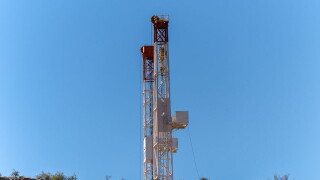
Output is rising fast in the South American shale play and putting Argentina on a course to soon reach 1 million B/D.

This case study presents a procedure in which the operator compared production from wells with adjusted wettability to a control group, finding that the adjustments resulted in significant improvements in production and reductions in produced water.
-
 The supermajor follows other oil companies including ExxonMobil, Equinor, and Occidental Petroleum in the hunt to bolster US supplies of lithium.
 -
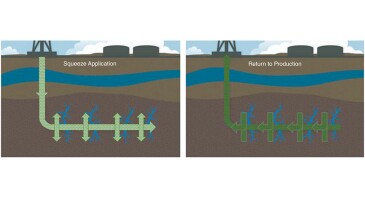
Secondary and tertiary efforts are critical for sustaining the productive lives of unconventional plays.
-
Viper Energy is acquiring Sitio Royalties Corp. and its more than 25,000 net acres of royalty interests across major US shale plays.
-
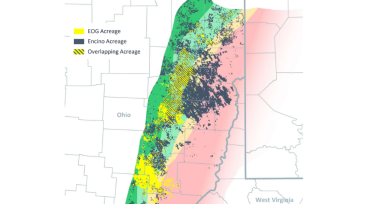
Extensive acreage overlap and existing operational collaboration drove the acquisition decision.
-
Best practices are not static; they evolve alongside advancements that redefine what is achievable.
-
This paper discusses the effect of injected-polymer viscosity on various aspects of a project, from recovery to surface facilities, including both theoretical arguments and practical field experience—which do not always align.
-
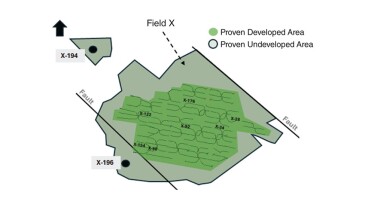
This study leverages oil-fingerprinting technology and geochemical data to evaluate the fluid connectivity between a main field and its stepout wells.
-
This paper provides details of a pilot study conducted on multiple wells, showcasing the potential of a novel biotechnology in Bakken enhanced oil recovery.
-
The authors of this paper describe a method of stimulating a multizone hydrocarbon-producing well wherein a tool is deployed downhole by wireline to generate acid vapor at a target depth, allowing each interval to be treated uniquely.
-
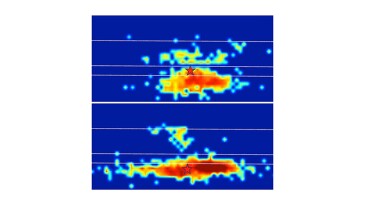
In this work, microseismic observations are integrated with strain and other observations to investigate the microseismic response in relation to the underlying hydraulic fracture geometry for different rock types.