Reservoir

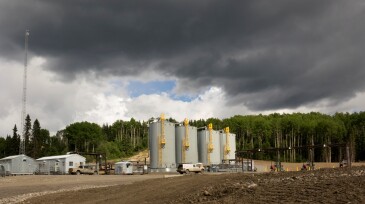
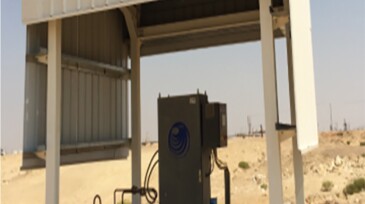
This case study describes how edge computing and industrial internet of things platforms were deployed to automate and optimize production operations across four distinct basins.

This case study presents a procedure in which the operator compared production from wells with adjusted wettability to a control group, finding that the adjustments resulted in significant improvements in production and reductions in produced water.

This year’s selected papers showcase meaningful advances across condensate‑rich tight gas, tight sandstones, and coalbed methane reservoirs, each contributing new tools for improving predictability and field-development efficiency.
-
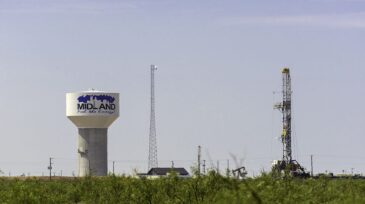
 A slate of new pipeline projects are expected to help relieve the oil-rich region's associated gas bottleneck.
 -
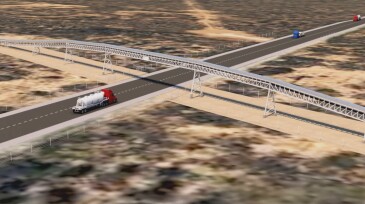
The first long-haul overland conveyor system to deliver proppant is under construction in the Permian Basin.
-
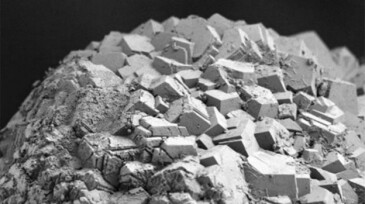
In an industry where methane leaks and carbon dioxide storage are increasingly important concerns, finding new ways to seal leaks is a valuable skill.
-
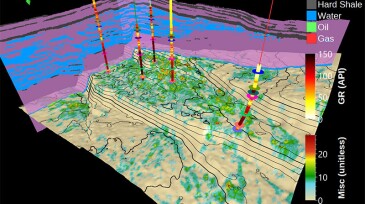
The seismic and well data investigation tool integrates work flows to provide a consistent analysis of reservoirs.
-
Enverus claims hundreds of millions of barrels of gas condensates are nowhere to be found in public data due to a major reporting gap.
-
This paper describes efforts at the Hydraulic Fracturing Test Site 2 to collect a research data set to improve understating of spatial and temporal hydraulic fracture dimensions, proppant distribution, and reservoir depletion.
-
This study introduces a data-driven virtual viscosity meter as a tool to augment inline and laboratory viscosity measurements.
-
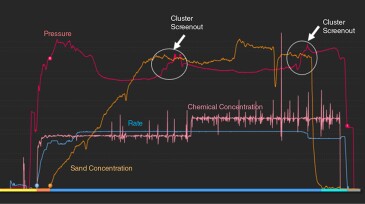
This paper presents an integrated system for fracturing optimization using real-time and historical data along with organizational knowledge and the challenges and key considerations of implementing such a system.
-
This paper describes the analysis of actual performance data for acid fracturing in a tight carbonate formation to investigate the ineffectiveness of the process.
-
The authors of this paper describe an underbalanced coiled-tubing drilling campaign in the operator’s onshore fields using a closed-loop system design.