

Reservoir

Bridging the gap between foundational guidance and real-world application, SPE’s Oil and Gas Reserves Committee is advancing PRMS education with a new, peer-reviewed training initiative. This article highlights the evolution of the PRMS knowledge base and introduces the PRMS Training Master Slides—a modular, instructor-led framework designed to improve consistency, cl…
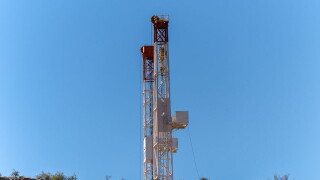
Output is rising fast in the South American shale play and putting Argentina on a course to soon reach 1 million B/D.

This case study describes how edge computing and industrial internet of things platforms were deployed to automate and optimize production operations across four distinct basins.
-
 The authors of this paper present results of a study that examined formation-damage mechanisms caused by drilling fluids in tight reservoirs in onshore oil fields in Abu Dhabi.
 -
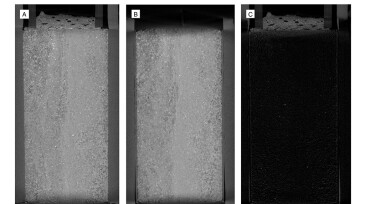
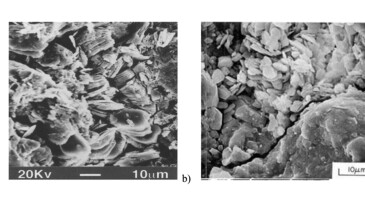
The authors of this paper present a laboratory-based model to determine the detachment of authigenic and detrital particles in formation damage.
-
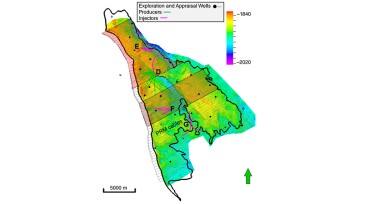
The authors of this paper write that 4D data are an integral part of a reservoir-management program and, together with geological and production history data, are being used to update reservoir models to further the goals of field development.
-
The authors of this paper discuss a biosurfactant treatment that offers an economical method for remediation of formation damage caused by high-molecular-weight paraffin wax deposition in porous media.
-
The UK company will purchase oil producing acreage across the northern part of the south Texas Eagle Ford shale play.
-
SPE Data Science and Engineering Analytics Technical Director Silviu Livescu and SPE Reservoir Technical Director Rodolfo Camacho address some of the challenges in the application of data analytics, artificial intelligence, and machine learning to several reservoir engineering problems.
-
The FAQs present questions frequently received from industry with answers prepared by the FAQ Subcommittee and reviewed by the SPE Oil and Gas Reserves Committee and Petroleum Resources Management System (PRMS) co-sponsors. The FAQs address select topics on the interpretation and application of the PRMS on the evaluation and classification of petroleum reserves and re…
-
This year’s titles have a good mix of new frontier exploration, expanding heartlands, and brownfield-development themes. Improved seismic survey techniques, seismic image uplift, enhanced seismic attribute analysis, reservoir characterization, fracture diagnostics, mitigation of induced seismicity, and carbon capture and storage topics also were featured.
-
Rate transient analysis has been challenged in every sense of the word when it comes to tight reservoirs. An ongoing joint industry project aims to turn that around.
-
Carbon capture and storage, with the potential for usage, will be crucial if the world is to prevent global warming. While Norway has been injecting captured CO2 in saline aquifers since the mid-1990s, there has been no attempt, and no plans exist, in Europe to use CO2 for EOR. Why not?






![JPT_2023-02_GuestEd_Essential-Features-of-the-CO2-EOR-Process[1].jpg](https://assets.spe.org/dims4/default/c0ca44d/2147483647/strip/true/crop/879x491+0+18/resize/365x204!/quality/90/?url=http%3A%2F%2Fspe-brightspot.s3.us-east-2.amazonaws.com%2Fdf%2Fbd%2F1d2a3a144d61b40dbfee45355579%2Fjpt-2023-02-guested-essential-features-of-the-co2-eor-process1.jpg)