Reservoir

Three papers are highlighted as the primary contributions because of their broad industry relevance. They focus on improving formation particle-size characterization, expanding the application of openhole gravel packs in depleted and compartmentalized reservoirs, and advancing the understanding of capillary pressure in sand production.

This paper aims to establish a set of best practices for generating particle-size-distribution data from core samples.

This paper discusses the successful execution of two openhole gravel-pack completions in two Gulf of Mexico fields with depleted reservoirs.
-
 The summer of 2019 has been rife with media reports about negative gas pricing in the Permian and, given the propensity of our industry to pick a favorite horse and then all pile on it at the same time, it is not surprising when we create our own boom and bust cycles.
 -
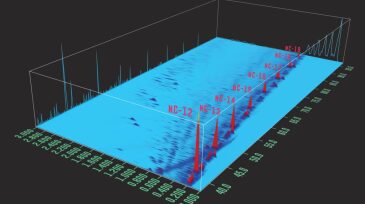
Knowing which horizon crude oil flows from and in what proportions has been a major challenge for shale producers. Increasingly, they are turning to new technology to find the answer.
-
The new numbers for the Marcellus Shale and Point Pleasant-Utica Shale represent large increases from previous USGS assessments of both formations.
-
The 16-MW solar facility in Ector County, Texas, near Odessa, powers the Goldsmith field through deployment of 174,000 photovoltaic panels.
-
Applications development in reservoir geomechanics has grown exponentially in recent years, taking advantage of significant computer breakthroughs. Data integration and multidisciplinary strategies are key to advancing integrated reservoir geomechanics capabilities.
-
The types of advancements made in real-time drilling data acquisition and processing are now on the doorstep of the North American completions sector. Technology developers are banding together under the umbrella of “coopetition” in a bid to change the way producers fracture tight reservoirs.
-
Well spacing optimization is one of the more important considerations in unconventional field development.
-
The authors examine methods of adopting an aggressive approach to optimizing stimulation design to lower the break-even level of operations and evaluate the results.
-
This paper reviews the IOR/EOR technologies currently being applied to unconventional oil reservoirs.
-
The authors present a novel data-driven tool for fast fracture identification in post-stack seismic data sets.