Reservoir

Three papers are highlighted as the primary contributions because of their broad industry relevance. They focus on improving formation particle-size characterization, expanding the application of openhole gravel packs in depleted and compartmentalized reservoirs, and advancing the understanding of capillary pressure in sand production.

This paper aims to establish a set of best practices for generating particle-size-distribution data from core samples.

This paper discusses the successful execution of two openhole gravel-pack completions in two Gulf of Mexico fields with depleted reservoirs.
-
 In this paper, the authors consider the development plan of shale gas or tight oil with multiple multistage fractured laterals in a large square drainage area that they call a “section” (usually 640 acres in the US).
 -
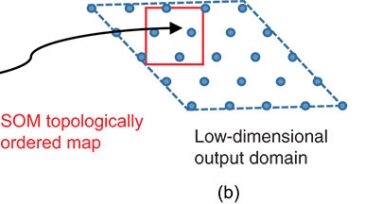
A new geostatistics modeling methodology that connects geostatistics and machine-learning methodologies, uses nonlinear topological mapping to reduce the original high-dimensional data space, and uses unsupervised-learning algorithms to bypass problems with supervised-learning algorithms.
-
Technology has been key to success in exploiting unconventional resources. In recognition of the current significant interest in this field, the upcoming issue of an SPE technical journal will feature peer-reviewed papers on the rapidly evolving suite of technologies for unconventional resources.
-
Researchers from Chevron are looking into a new approach to understand the drivers of polymer hydration. How might this affect the design of mixing systems in the field, and could it affect offshore EOR applications?
-
Since its publication in 2007, the SPE Petroleum Resources Management System (PRMS) has been broadly adopted by the petroleum industry as the international standard reference for reserves and resources classification and reporting.
-
This paper presents the evolution of a Bakken advanced completion design with the added enhancement of extreme limited entry (XLE) perforating. With this strategy, an operator has consistently stimulated more than 11 perforation clusters per stage.
-
The author writes that the generally accepted Knudsen diffusion in shales is based on a mistranslation of the flow physics and may give theoretically unsound predictions of the increased permeability of shales to gas flow.
-
The technology will provide Equinor a continual feed of updated reservoir information from its Johan Castberg and Johan Sverdrup fields with the aim of improving well placement, production, injection, and—ultimately—recovery.
-
A marked change from a decade ago, Appalachia, the Permian, and the Haynesville now represent almost half of total US gas production, EIA reports.
-
The paper discusses the main factors affecting CO2 corrosion, provides an assessment of what to look for in major equipment, and details recommended material of construction and corrosion mitigation/control methods.