Reservoir

Canada’s development of large-scale digital drilling core libraries and open geoscience data platforms follows approaches pioneered in Australia, particularly Western Australia, through decades of government investment in geoscience data collection and preservation.

Three papers are highlighted as the primary contributions because of their broad industry relevance. They focus on improving formation particle-size characterization, expanding the application of openhole gravel packs in depleted and compartmentalized reservoirs, and advancing the understanding of capillary pressure in sand production.

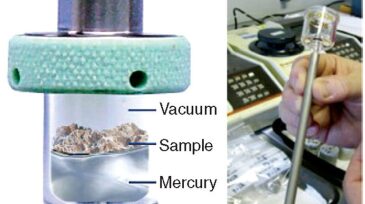
This paper aims to establish a set of best practices for generating particle-size-distribution data from core samples.
-
 The careful planning and successful execution of a multistage-fracture-stimulation completion in one of the first horizontal wells (KZN-F) drilled in the Amin formation in north central Oman instigated a step change in initial production rate and long-term deliverability from this tight-gas-sandstone reservoir. The operator and service company worked as a team, modeli…
 -
When interviewing potential senior-petrophysicist recruits, we exchange pleasantries to break the ice and then I ask an easy, yet fundamental technical question: “How would you explain Archie’s law to an inexperienced colleague?” Then, I sit back in expectation of a slick answer from the candidate. Imagine my surprise when the interviewee takes a sharp intake of breat…
-
The evaluation of complex carbonate reservoirs is a challenging task, and a detailed understanding of reservoir heterogeneity is still lacking. In this study, the effect of static rock type and sample size was investigated on special-core-analysis laboratory (SCAL) data derived from capillary pressure and resistivity-index experiments at reservoir temperature and net …
-
Accurate determination of relative permeability hysteresis is needed to predict water-alternating-gas (WAG) injection reliably. Two series of gas/water relative permeability hysteresis curves were obtained from corefloods under mixed-wet conditions. The results revealed that none of the widely used hysteresis models (e.g., Carlson and Killough models) is able to predi…
-
Drillstem testing of low-permeability reservoirs is challenging because high-pressure drawdown around the wellbore lowers fluids below saturation pressure and creates two-phase flow into the wellbore. The fluids produced at surface no longer represent the original reservoir fluid. This paper shows the benefits of a careful methodology of data selection and equation-of…
-
The variable data quality of core analysis, the sensitivity of results to different test methods, poor reporting standards, and the reluctance of some vendors to share experience and expertise have contributed to basic mistakes and poor data quality.
-
In this second article of a series covering water management in hydraulic fracturing (HF) in unconventional resources, the properties and characteristics of the flowback fluids are discussed, together with the general categories of technologies that are best suited to treat them.
-
Exploration wells, unconventional plays, and development wells can benefit from NeoScope, a sourceless formation evaluation-while-drilling solution. Two case studies share how the technology mitigates the risks or logistic complications associated with chemical nuclear sources.
-
This paper presents a pragmatic approach to frame, evaluate, and compare appraisal strategies in resource plays.
-
The M4-field reservoir is approximately 2000 m below sea level in a water depth of approximately 120 m. A carbon dioxide (CO2) geological-storage study was carried out to determine the feasibility of injecting and storing CO2 in the depleted M4 carbonate gas reservoir.