Reservoir

This study demonstrates how routinely acquired downhole temperature data allows for direct estimation of fluid saturations and delivers more accurate reservoir volume assessments, particularly in aquifer-supported systems.

Sponsored
Effective data analysis depends on seeing connections that matter. Explore how Spotfire enables a more intuitive approach to understanding petroleum data.

The deal adds over 1,000 potential drilling locations and almost doubles oil production for Houston-based Magnolia.
-
 Aramco’s investment pivot to gas aims to propel Saudi Arabia into the top tier of gas producers and LNG players globally by 2030.
 -
The Integrated Reservoir Management Technical Section is committed to unite a community of technical professionals and academia driven to enhance reservoir performance by harnessing technological innovations and creating a collaborative space for strategic discussions and sustainable practices.
-
Fundamental research conducted to derive a transport model for ideal and partitioning tracers in porous media with two-phase flow that will allow fast and efficient characterization and selection of the correct tracer to be used in field applications.
-
The deal significantly expands the company’s position in the Bakken Shale play of North Dakota.
-
The authors of this paper review the advantages of machine learning in complex compositional reservoir simulations to determine fluid properties such as critical temperature and saturation pressure.
-
This paper highlights an approach of using active hydrogen to stimulate hard-to-recover formations from candidate-well selection through pilot execution and evaluation.
-
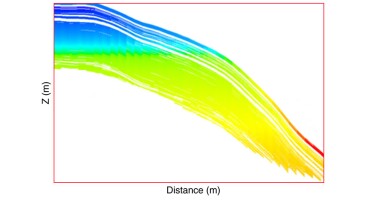
This work presents an integrated multiphase flow model for downhole pressure predictions that produces relatively more-accurate downhole pressure predictions under wide flowing conditions while maintaining a simple form.
-
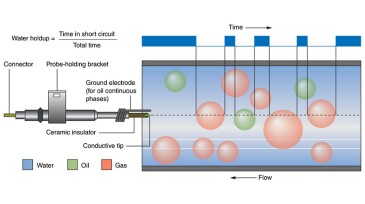
This study describes a technique combining borehole acoustic reflection imaging with production logging in a horizontal well experiencing high water cut with the aim of enabling a mitigation plan.
-
The aim of this study is to address and discuss the reservoir engineering aspects of geological hydrogen storage.
-
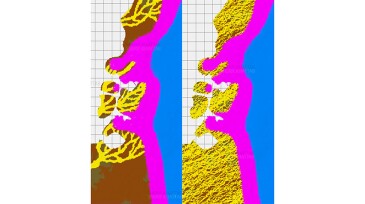
This paper details how the reservoir modeling workflow can be accelerated, and uncertainty reduced, even for challenging greenfield prospects by constructing multiple small fit-for-purpose integrated adaptive models.