Reservoir

Coreflood experiments reveal that alkali significantly reduces viscosity loss in polyacrylamide flooding systems by minimizing adsorption and improving polymer stability under shear stress. The findings position viscosity retention as a key screening criterion for successful alkali-polymer enhanced-oil-recovery applications.

This SPE technical section editorial synthesizes six technical themes shaping CO2 transport and storage and interprets them through a petroleum engineering capability lens.

The UAE project is expected to produce up to 345 MMscf/D by 2029, with expansion potential to 1 Bcf/D.
-
 This study explores enhancing gas production through a novel combination of prestimulation using a coiled tubing unit and high-rate matrix acidizing.
-
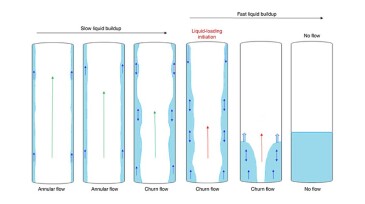
This work introduces a fast, methodical approach to detect liquid loading using easily available field data while avoiding traditional assumptions and to determine critical gas rates directly from field data.
-
Bad vibes are being addressed by contractors as operators push to go faster, deeper, and longer with unconventional wells.
-
A New Texas Two-Step: Why One Eagle Ford Producer Is Using Hydrocarbons for Well Stimulation and EORBlackBrush Oil & Gas tells JPT about its use of natural gas liquids and condensate to increase oil recovery in horizontal shale wells.
-
The latest merger and acquisition report from Enverus Intelligence Research shows deal value fell 21% quarter over quarter.
-
This paper studies the effect of salinity and hardness on partially hydrolyzed polyacrylamide rheology in sandstones with relevance to polymer flooding models and simulations.
-
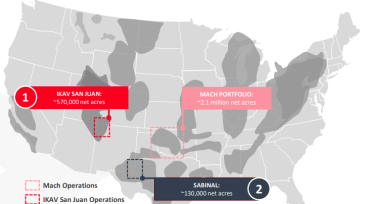
The traditionally Oklahoma-centric producer adds new acreage in west Texas and New Mexico through a pair of purchases.
-
As Africa’s top oil producer, Libya is ramping up momentum—offering 22 exploration areas and welcoming BP back to Tripoli with a major deal.
-
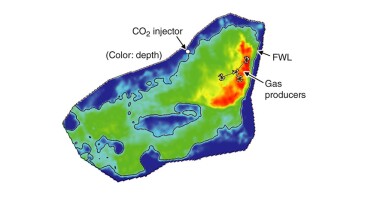
The authors present an efficient workflow using an embedded discrete fracture model to simulate carbon-dioxide flow by use of conductive faults.
-
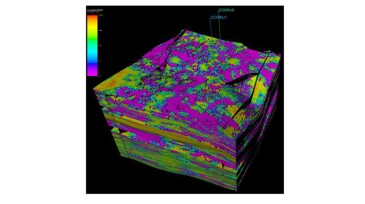
The authors of this paper present an adaptive grid-coarsening approach based on constraints that honor reservoir structure and stratigraphy, preserve fluid volumes and contacts, and retain resolution near wells.