Reservoir

Coreflood experiments reveal that alkali significantly reduces viscosity loss in polyacrylamide flooding systems by minimizing adsorption and improving polymer stability under shear stress. The findings position viscosity retention as a key screening criterion for successful alkali-polymer enhanced-oil-recovery applications.

This SPE technical section editorial synthesizes six technical themes shaping CO2 transport and storage and interprets them through a petroleum engineering capability lens.

The UAE project is expected to produce up to 345 MMscf/D by 2029, with expansion potential to 1 Bcf/D.
-
 The complete paper aims to identify the role of different geological settings with different types of fluid saturations in the response of EM-wave propagation and absorption.
-
In the complete paper, the authors generate a model by using an artificial-neural-network (ANN) technique to predict both capillary pressure and relative permeability from resistivity.
-
Eni and IBM developed a cognitive engine exploiting a deep-learning approach to scan documents, searching for basin geology concepts and extracting information about petroleum system elements.
-
The complete paper describes the first successful implementation of natural dumpflooding offshore Malaysia as a case study to provide insight into the value of using the approach to maximize oil recovery in a mature field, particularly in a low-margin business climate.
-
The enhanced-oil-recovery literature produced in the past several months was dominated by reservoir modeling and characterization; flood enhancements; machine learning; and, more notably, relative permeability estimation. This last one needs to be understood further.
-
Malaysia’s national oil and company will employ the technology suite in secondary recovery and well stimulation. The deal follows the service provider’s recent agreements in the Middle East.
-
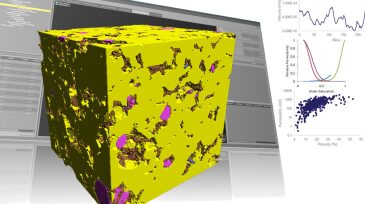
SponsoredThermo Scientific e-Core Software is a unique, high-performance computing platform for the characterization of complex porous media. It focuses on the three essential components of Digital Rock Analysis: parallel computing, multiscale modeling, and process-based reconstruction of 3D volumes.
-
The UK offshore Lancaster field was to prove that complex basement formations could be profitably developed. Instead, it is a reminder of how a long-term production test can drastically alter a reservoir model built upon years of exploration work.
-
The complete paper outlines some of the challenges involved in late-life field management and how Reserves assessment may be affected.
-
During the past decade, hundreds of unconventional oil and gas projects have failed to deliver the value sought by shareholders.