Reservoir

As Egypt’s largest oil and gas investor, Eni is ramping up its 2026–2027 drilling campaign with new investments cross the Mediterranean offshore, Nile Delta, Western Desert, and offshore Sinai to strengthen the country’s role as a regional gas and LNG export hub.

The industry is no longer short of measurements; the real challenge is converting them into timely reservoir decisions that protect value. That challenge is becoming more urgent as the industry depends increasingly on mature fields and existing infrastructure. The selected papers show how this need is being addressed across different producing regions.

This paper presents a case study from a mature field redevelopment project where pulsed neutron logging was integrated with advanced reservoir modeling to improve the understanding of fluid-contact dynamics and optimize new horizontal well placement.
-
 Current efforts demonstrate that industry is undertaking responsible scientific, social, and environmental management.
 -
This paper presents a methodology that provides the upstream industry with a robust approach to petroleum inventory management.
-
This paper presents a coupled 3D fluid-flow and geomechanics simulator developed to model induced seismicity resulting from wastewater injection.
-
Fluid saturation isn't what it used to be when it comes to unconventional reservoirs. Our guest is among those sharing new research to discuss the shale sector’s changing perspectives on the importance of mobile hydrocarbons vs. immobile hydrocarbons.
-
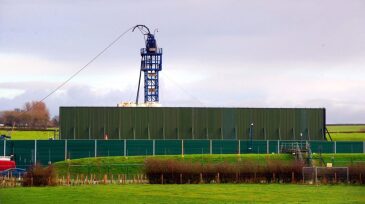
The decision comes 2 months after UK shale operator Cuadrilla Resources halted stimulation work at its Preston New Road site in Lancashire because of a magnitude 2.9 seismic event.
-
The objective of the study described in this paper was to investigate the feasibility of huff ‘n’ puff enhanced oil recovery (EOR) in a gas-condensate reservoir.
-
The complete paper describes a Monte Carlo simulation approach and field analysis showing that a small-scale GTL plant in North Dakota could be a profitable solution to mitigating the state’s current flaring rate of 35% of the natural gas produced.
-
The summer of 2019 has been rife with media reports about negative gas pricing in the Permian and, given the propensity of our industry to pick a favorite horse and then all pile on it at the same time, it is not surprising when we create our own boom and bust cycles.
-
This study focus on the design and evaluation of a customized water-based mud (NP-WBM) using silica oxide nanoparticles (SiO2-NPs) and graphene oxide nanoplatelets (GNPs).
-
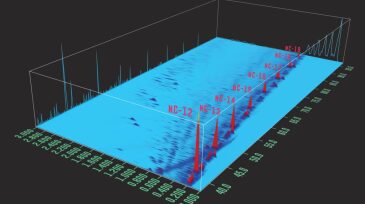
Knowing which horizon crude oil flows from and in what proportions has been a major challenge for shale producers. Increasingly, they are turning to new technology to find the answer.