Reservoir

As Egypt’s largest oil and gas investor, Eni is ramping up its 2026–2027 drilling campaign with new investments cross the Mediterranean offshore, Nile Delta, Western Desert, and offshore Sinai to strengthen the country’s role as a regional gas and LNG export hub.

The industry is no longer short of measurements; the real challenge is converting them into timely reservoir decisions that protect value. That challenge is becoming more urgent as the industry depends increasingly on mature fields and existing infrastructure. The selected papers show how this need is being addressed across different producing regions.

This paper presents a case study from a mature field redevelopment project where pulsed neutron logging was integrated with advanced reservoir modeling to improve the understanding of fluid-contact dynamics and optimize new horizontal well placement.
-
 Figuring out how far apart to place horizontal wellbores remains one of the biggest challenges facing the future of the shale revolution. One roadblock appears to be the way in which the sector has traditionally measured these distances.
 -
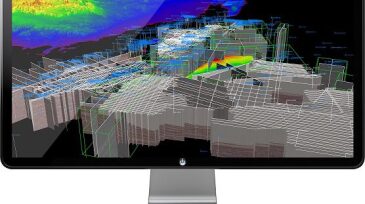
The engineering and technology company announced its entire exploration and production software suite is now available on the cloud, enabling oil and gas companies to take advantage of digital technologies securely and to model and optimize production better.
-
The project aims to contribute an estimated ultimate recovery of more than 175 MMboe from one of the company’s signature deepwater projects in the US Gulf of Mexico.
-
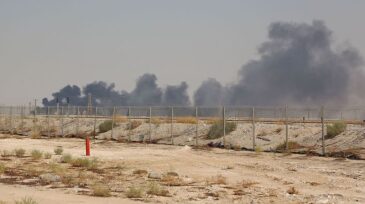
Tensions in the region spike as US blames Iran.
-
The objective of this study was to look at factors that can affect a temperature log and steps that can be taken to improve temperature-measurement accuracy.
-
This paper presents a data set involving the pumping of multiple, unique chemical tracers into a single Wolfcamp B fracture stage.
-
The complete paper describes a physics-based model of interference and a sensitivity study to propose guidelines for well spacing and a drilling timeline for multiple horizontal wells in the Vaca Muerta shale.
-
The Russian company has built a computing cluster in St. Petersburg designed to generate digital twins of oil fields. The new distributed-computing system is capable of processing more than 100 gigabits per second, speeding up the digital-modeling process five-fold.
-
A fracturing test site in West Virginia has quietly made a data trove available on the website of the Marcellus Shale Energy and Environment Lab.
-
In this paper, the authors discuss the characterization process for GR tools and how they behave in boreholes different from the one used in the University of Houston (UH) GR characterization pit.