Reservoir

As Egypt’s largest oil and gas investor, Eni is ramping up its 2026–2027 drilling campaign with new investments cross the Mediterranean offshore, Nile Delta, Western Desert, and offshore Sinai to strengthen the country’s role as a regional gas and LNG export hub.

Disposal wells remain the lowest-cost solution for produced water, but concerns over seismicity and long-term sustainability are accelerating interest in alternatives.

This paper presents an experiment investigating dissolution of basaltic primary minerals and conditions favorable for secondary phase formation under deep subsurface storage conditions.
-
 The most popular technology for producing heavy oil (HO) and bitumen is reservoir heating, mainly by steam injection.
 -
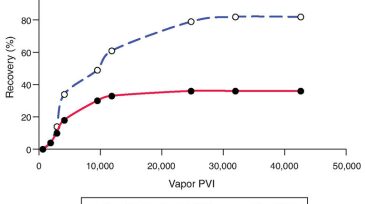
This paper presents an investigation into the effect of catalytic nanoparticles on the efficiency of recovery from continuous steam injection.
-
Three-dimensional reservoir models are best created with a combination of well logs and 3D-seismic data. However, the effective integration of these results is not easy because of limited seismic resolution.
-
The paper discusses an approach for predicting the lateral variation of net to gross (NTG) by use of 3D probabilistic seismic inversion.
-
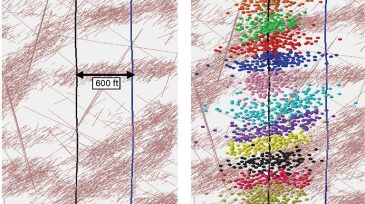
The objective of this study is to validate the concept of using a seismically derived discrete fracture network (DFN) calibrated with borehole measurements, for complex-hydraulic-fracture modeling.
-
SPE conferences in Calgary examine the challenges of finding and producing heavy oil and unconventional hydrocarbons at a time when Canadian producers are feeling exceptional price pressures.
-
With an uncertain future spawning from the Brexit referendum, the British government is seeking to maintain as much consistency in its energy policy as possible.
-
A new play in the Permian Basin is unconventional in an unexpected way: there is a small group of independents producing from a watery formation where oil production begins after they have pumped only water for weeks.
-
Knowledge of the maximum- and minimum-permeability directions in anisotropic reservoirs helps to optimize injector and producer locations and is important for reservoir management, especially under secondary or enhanced recovery of hydrocarbons.
-
The application of high-precision downhole temperature sensors has resulted in pressure-transient analysis (PTA) being complemented or replaced by temperature-transient analysis (TTA).