Reservoir

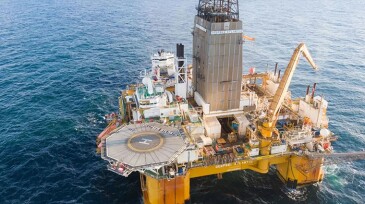
As Egypt’s largest oil and gas investor, Eni is ramping up its 2026–2027 drilling campaign with new investments cross the Mediterranean offshore, Nile Delta, Western Desert, and offshore Sinai to strengthen the country’s role as a regional gas and LNG export hub.

The industry is no longer short of measurements; the real challenge is converting them into timely reservoir decisions that protect value. That challenge is becoming more urgent as the industry depends increasingly on mature fields and existing infrastructure. The selected papers show how this need is being addressed across different producing regions.

This paper presents a case study from a mature field redevelopment project where pulsed neutron logging was integrated with advanced reservoir modeling to improve the understanding of fluid-contact dynamics and optimize new horizontal well placement.
-
 This polymer retention study examines temperature effect on an ATBS-based polymer, using single- and two-phase retention studies and different analytical methods in the presence and absence of oil.
 -
Partners will go back to the drawing board to design a new well to reach the prospect’s primary objectives.
-
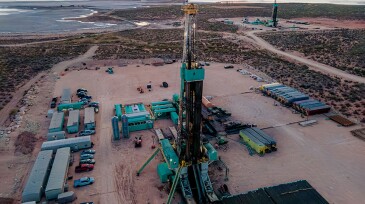
Turnwell said it achieved a new well delivery time as it begins a massive contract to develop the UAE’s unconventional gas resources.
-
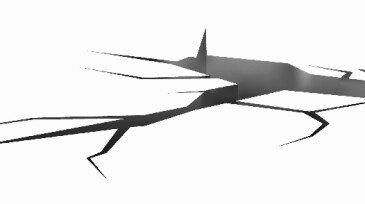
A novel approach uses the heart-shaped signal in low-frequency distributed acoustic sensing measurements to estimate the hydraulic fracture tip distance before the hydraulic fracture intersects the monitor well, offering critical insight into the characterization of hydraulic fracture propagation.
-
This paper presents three examples covering both gas and oil fields at different stages of their lives that show how estimated ultimate recovery (EUR) and the corresponding range of EUR uncertainty varies over the life of each field.
-
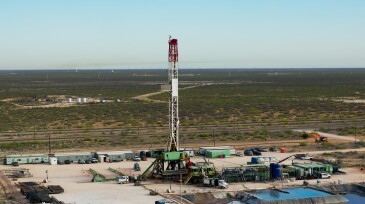
At SPE’s Permian Basin Energy Conference, operators shared behind-the-scenes details on innovations such as drilling horseshoe wells and trimulfrac completions along with in-basin challenges such as handling produced water.
-
The partnership between GLJ and Energy Fuse Group aims to leverage the expertise of both companies in project management, operational design, and subsurface and commercial evaluations to facilitate effective CO2 storage solutions.
-
Operator acquiring oil-weighted New Mexico assets of both Franklin Mountain Energy and Avant Natural Resources.
-
The Denver-based independent is boosting its position in the Canadian shale play by 109,000 net acres, and about 70,000 BOE/D.
-
The SPE IOR-EOR Terminology Review Committee has released its recommendations for the use of IOR, EOR, and newly introduced term, assisted oil recovery (AOR).