Reservoir
The UAE project is expected to produce up to 345 MMscf/D by 2029, with expansion potential to 1 Bcf/D.

This paper presents the application of degradable particulate-diverter technology to improve oil production by effectively diverting stimulation treatment fluids away from high-water-cut, high-permeability, high-temperature producing intervals or zones.

This study investigates the potential for in-situ hydrogen generation from hydrocarbons using in-situ combustion, with particular emphasis on the role of kerogen content and heating mode.
-
 This paper presents a specialized workflow that aims to quantify the severity of condensate banking and subsequently optimize reservoir development strategies for a deep formation in the Permian Basin.
-
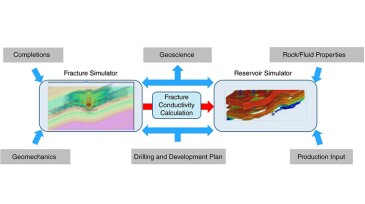
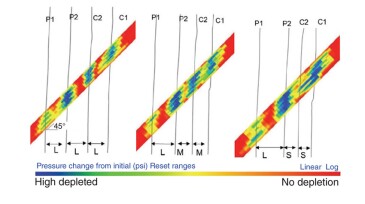
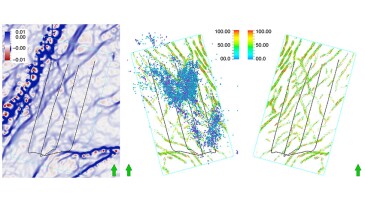
This paper describes numerical modeling studies of fracture-driven interactions using a coupled hydraulic-fracturing-propagation, reservoir-flow, and geomechanics tool.
-
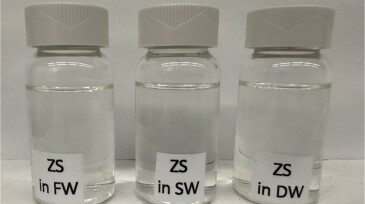
This study explores the potential of locally produced surfactants for enhanced oil recovery in high-temperature and high-salinity reservoir environments.
-
A proposed integrated workflow aims to guide prediction and mitigating solutions to reduce casing-deformation risks and improve stimulation efficiency.
-
International agreements and national policies on environmental sustainability are changing the outlook for enhanced oil recovery globally. These changes are highlighted by both monetary and intellectual commitments by oil companies around the world.
-
This paper describes a polymer-injection pilot in the Chichimene heavy oil field in Colombia.
-
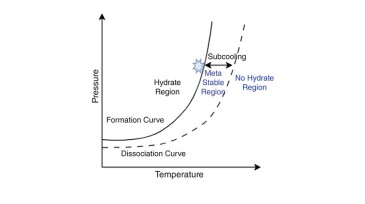
This study investigates hydrate formation in a water-alternating-gas injection well under water-to-gas and gas-to-water changeover operations.
-
This case study outlines a methodology to optimize and control hydraulic fracturing parameters by achieving 100% cluster efficiency and overcoming formation leak-off.
-
The companies have finished a seismic survey of an underexplored area of the Bonaparte Basin offshore northwest Australia.
-
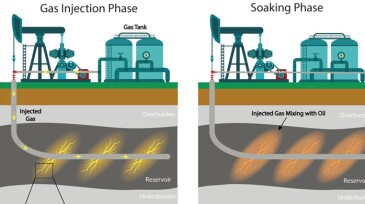
This paper presents a comprehensive literature review and critical examination of the published modeling and experimental studies regarding the recovery mechanisms of cyclic gas injection and the conditions under which the process can enhance oil recovery with the aim to identify lessons learned and areas in need of further study.