Reservoir

As Egypt’s largest oil and gas investor, Eni is ramping up its 2026–2027 drilling campaign with new investments cross the Mediterranean offshore, Nile Delta, Western Desert, and offshore Sinai to strengthen the country’s role as a regional gas and LNG export hub.

The industry is no longer short of measurements; the real challenge is converting them into timely reservoir decisions that protect value. That challenge is becoming more urgent as the industry depends increasingly on mature fields and existing infrastructure. The selected papers show how this need is being addressed across different producing regions.

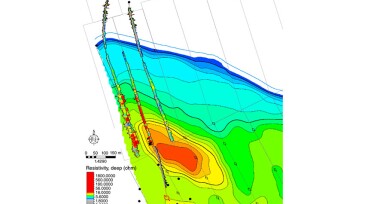
This paper presents a case study from a mature field redevelopment project where pulsed neutron logging was integrated with advanced reservoir modeling to improve the understanding of fluid-contact dynamics and optimize new horizontal well placement.
-
 Samsung E&A takes home $6 billion of the total amount as EPC contractor.
 -
As the biggest US companies grow bigger, the advantage of scale becomes clearer.
-
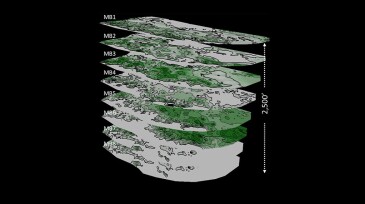
A 44-well development tests what ConocoPhillips has learned about maximizing the value of the wells by figuring out how they drain the reservoir.
-
The physical characteristics of heavy oil and the formations in which it is found are often unique to a region or even to a specific asset, so recovery techniques must be tuned, adapted, and sometimes invented for each region. Creative professionals around the world are taking up this challenge and sharing their work with us in a wealth of excellent recent publication…
-
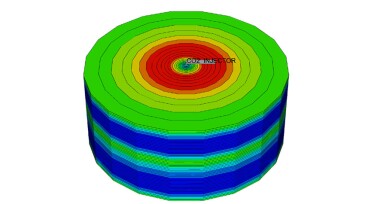
This paper develops a deep-learning work flow that can predict the changes in carbon dioxide mineralization over time and space in saline aquifers, offering a more-efficient approach compared with traditional physics-based simulations.
-
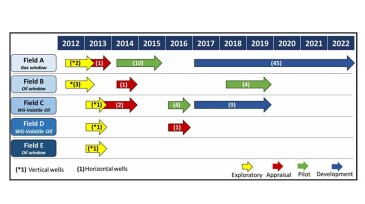
This paper explains how an operator’s projects in the Vaca Muerta have become more-efficient and cost-effective by increasing production and reducing well-delivery-cycle time while fostering the long-term sustainability of the project.
-
This paper describes the potential, challenges, and opportunities of using a modified steam-assisted gravity drainage configuration in the Mukhaizna heavy oil field in suboptimal operating conditions.
-
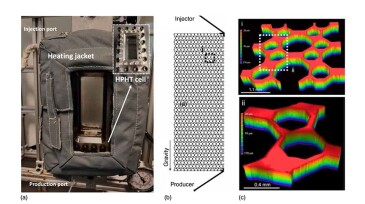
This study aims at understanding the effect of a surfactant known as a high-temperature emulsifying agent as an additive to the steam-assisted gravity drainage process and the possibility of forming oil-in-water emulsions.
-
This paper describes the implementation of a hybrid technology of cyclic steam stimulation and foam into the heavy oil field development plans of the Middle Magdalena Valley basin in Colombia.
-
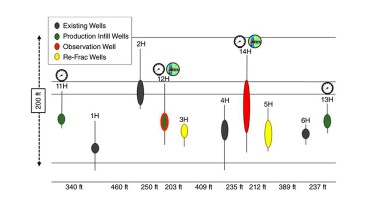
This paper’s focus is a case study of an Eagle Ford refracturing project in which a range of completion designs were trialed with an approach using offset sealed wellbore pressure monitoring and fiber-optic strain.